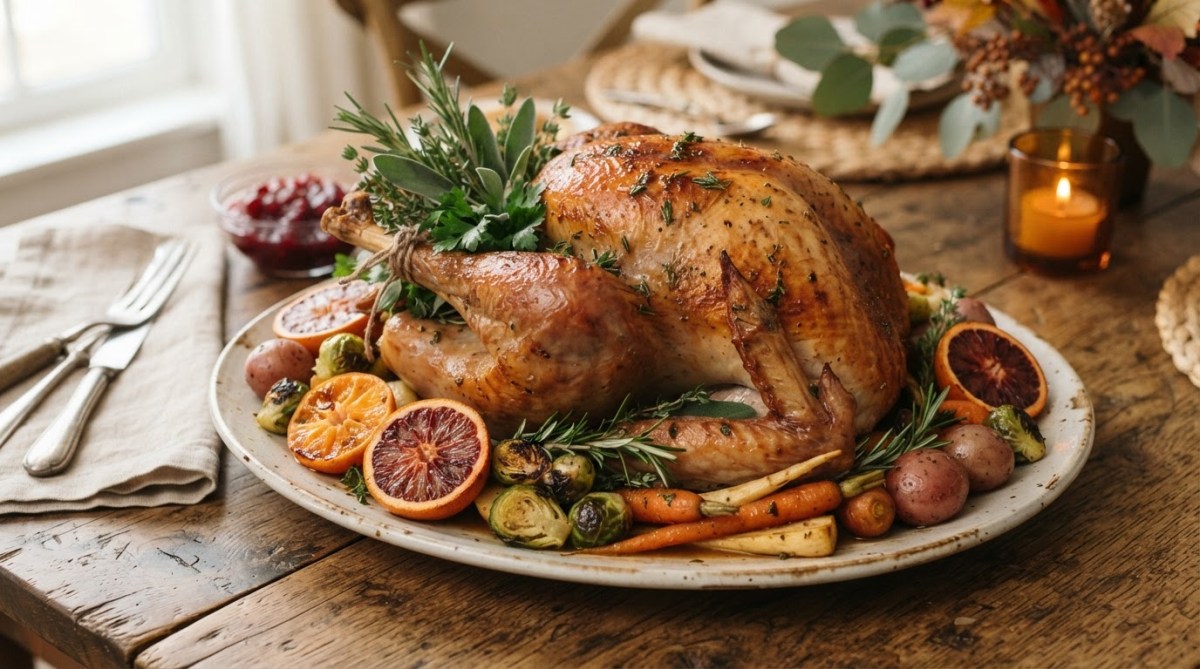
You have chosen the turkey, invited the guests, and started thinking about the side dishes. Now comes the question that makes even experienced cooks nervous: how do you prepare a Thanksgiving turkey that stays juicy, develops golden skin, and is ready when everyone sits down? The good news is that a delicious holiday bird does not require an elaborate technique. With a safe thaw, a simple herb-butter seasoning, an accurate thermometer, and a little planning, you can make the centerpiece of the meal feel manageable. This guide walks you through the entire process, from the refrigerator to the carving board.
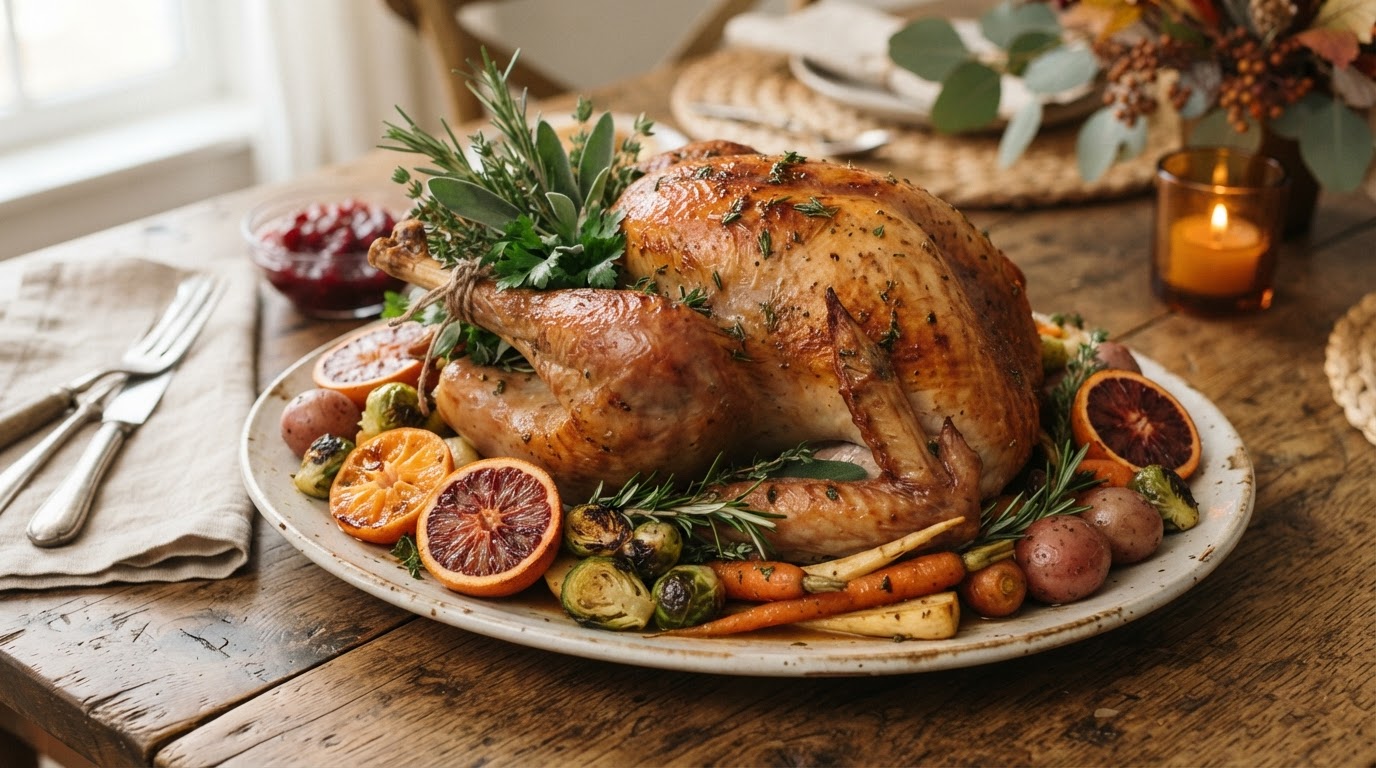
The Simple Herb-Butter Thanksgiving Turkey Recipe
Best for: A fresh or fully thawed, unstuffed 12–14-pound whole turkey. Serves: About 10–12, depending on appetites and leftovers. Hands-on preparation: About 25–35 minutes. Roasting: Approximately 3–3¾ hours at 325°F. Resting: 20–30 minutes. Cooking time is an estimate; the thermometer determines when the bird is done.
Ingredients
- 1 whole turkey, 12–14 pounds, fully thawed if frozen
- 6 tablespoons unsalted butter, softened
- 1 tablespoon kosher salt, or to taste (reduce or omit if the turkey is pre-brined or labeled enhanced)
- 2 teaspoons freshly ground black pepper
- 2 teaspoons finely chopped fresh rosemary
- 2 teaspoons fresh thyme leaves
- 1 teaspoon finely chopped fresh sage
- 3 garlic cloves, minced
- 1 lemon, halved
- 1 small onion, quartered
- 1 cup low-sodium chicken or turkey broth for the pan, if needed
You will also need a roasting pan with a rack, paper towels, a small mixing bowl, and a reliable instant-read meat thermometer. Fresh herbs offer a bright, familiar holiday aroma, but dried herbs work in a pinch: use roughly one-third as much.
Step 1: Thaw the Turkey Safely
If your turkey is frozen, make thawing the first task on your holiday calendar. Keep it in its wrapping, set it on a rimmed tray on the bottom refrigerator shelf, and allow about 24 hours for every 4–5 pounds. A completely thawed turkey may remain refrigerated for another one to two days before cooking.
Refrigerator thawing guide
- 8–12 pounds: approximately 2–3 days
- 12–16 pounds: approximately 3–4 days
- 16–20 pounds: approximately 4–5 days
- 20–24 pounds: approximately 5–6 days
Running short on time? Place the turkey in a leakproof bag, submerge it in cold water, and change the water every 30 minutes. Plan on about 30 minutes per pound, and cook immediately after this method. Never thaw a turkey on the counter or in warm water. These guidelines follow recommendations from the CDC and USDA.
Step 2: Prepare the Turkey Without Washing It
Remove the wrapper, then check both cavities for the neck and giblet packages. Set these aside for stock or gravy if you like. Pat the turkey thoroughly dry with paper towels, including the underside and accessible skin folds. Dry skin browns more readily than wet skin.
Do not rinse raw turkey. Splashing water can spread bacteria around the sink and nearby counters. Instead, wash your hands after handling the bird and clean utensils and surfaces that contact raw turkey.
Step 3: Make the Herb Butter
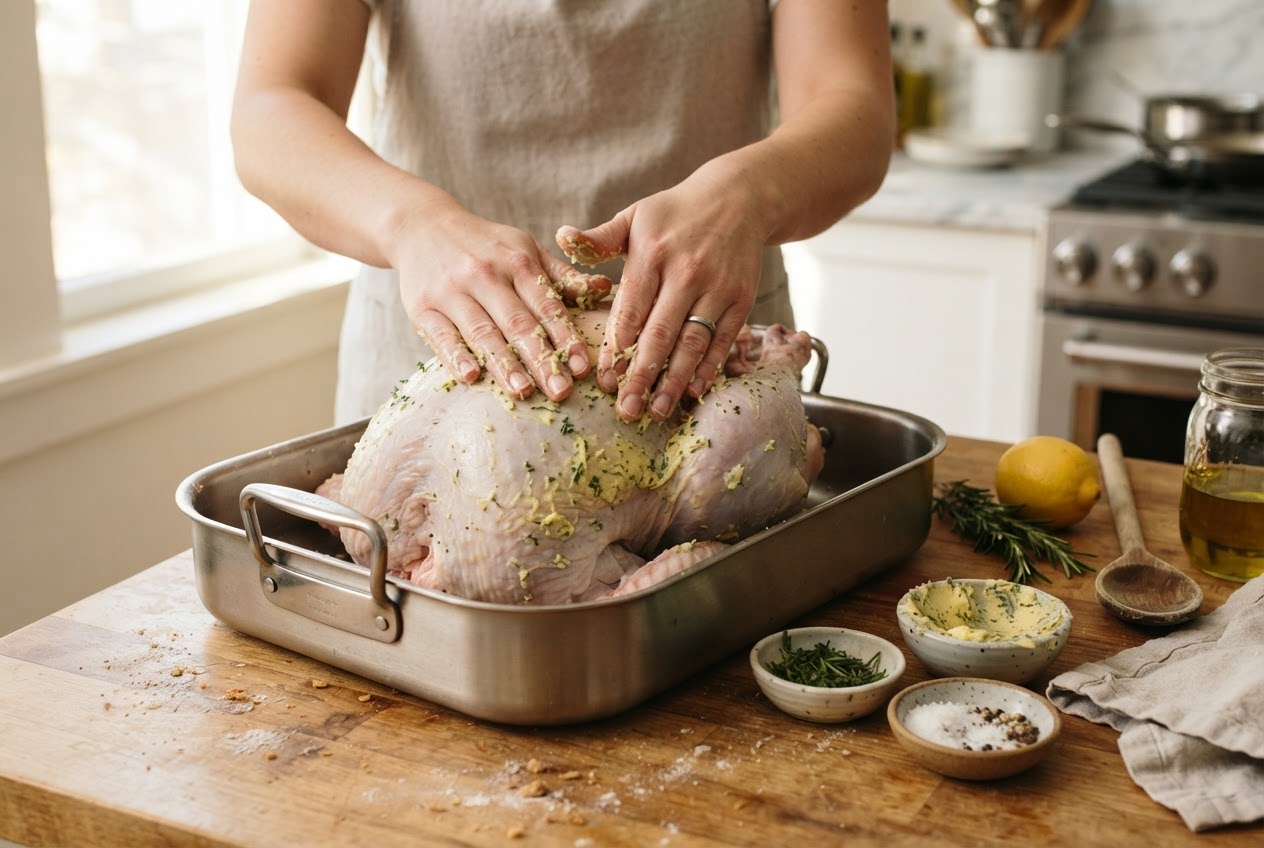
Combine the softened butter with the salt (if needed), black pepper, rosemary, thyme, sage, and minced garlic. Stir until the herbs are evenly distributed. The mixture should spread easily; if the butter is hard, give it a few minutes to soften at room temperature before mixing.
For more flavorful breast meat, gently loosen the skin over the breasts with clean fingers, taking care not to tear it. Slide a portion of the herb butter under the skin and spread the rest over the outside of the turkey. This places some seasoning directly against the meat while helping the exterior develop a beautiful finish.
Step 4: Add Aromatics and Set Up the Roasting Pan
Place the lemon halves and onion quarters loosely inside the cavity. They contribute aroma rather than acting as a substitute for seasoning. You can add a few spare herb sprigs, too, but leave plenty of room for heat to circulate.
Set the turkey breast-side up on the roasting rack. Tuck the wing tips underneath so they do not burn. Loosely tie the legs if desired, without pulling them tightly against the body. Add about a cup of broth to the bottom of the pan if the drippings are likely to scorch; keep the liquid below the bird rather than soaking the skin.
For even cooking and simpler food safety, bake your bread stuffing in a separate dish. Stuffing cooked inside the turkey must also reach 165°F at its center, which can make timing less predictable.
Step 5: Roast at 325°F and Use a Thermometer
Preheat the oven to 325°F. Place the turkey in the oven and roast, without repeatedly opening the door. If the breast or skin becomes dark before the meat is cooked through, loosely tent that area with foil. Regular basting is optional, not essential: it can interrupt oven heat and soften otherwise crisp skin.
How long to cook a Thanksgiving turkey
These approximate USDA roasting ranges apply to fully thawed, unstuffed whole turkeys at 325°F:
- 8–12 pounds: 2¾–3 hours
- 12–14 pounds: 3–3¾ hours
- 14–18 pounds: 3¾–4¼ hours
- 18–20 pounds: 4¼–4½ hours
- 20–24 pounds: 4½–5 hours
Start checking the internal temperature before the shortest estimate is up. Insert the thermometer into the thickest part of the breast, the inner thigh, and the inner wing area without touching bone. All three locations must reach at least 165°F. If your turkey came with a pop-up indicator, verify it with a separate thermometer.
The most useful tool for Thanksgiving dinner is not a specialty roasting gadget: it is a dependable thermometer. It replaces guesswork with a clear, repeatable food-safety check.
Step 6: Let the Turkey Rest Before Carving
Once the turkey reaches the proper temperature, transfer it carefully to a clean platter or carving board. Tent loosely with foil and let it rest for about 20–30 minutes. Resting gives the juices time to settle and makes carving easier. Use this pause to finish your gravy, warm the rolls, or arrange the last side dishes.
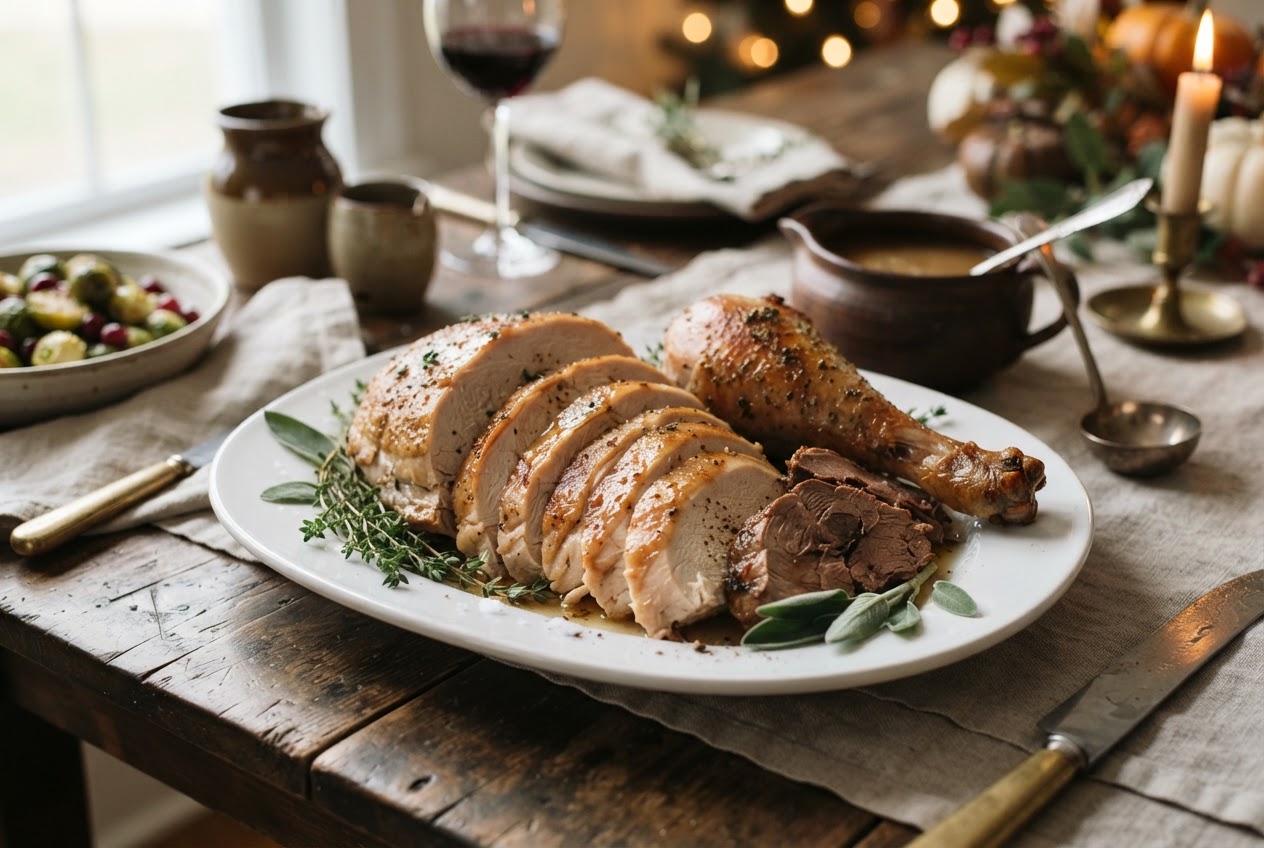
For a neat presentation, remove the legs and thighs at their joints first, then separate the wings. Slice the breast meat off the bone in large sections and cut it crosswise into serving pieces. Arrange the slices and dark meat on a platter with a few herb sprigs; no complicated garnish is necessary.
How to Make Simple Turkey Gravy from the Drippings
The browned bits and liquid in the roasting pan can become a flavorful gravy while the turkey rests. Carefully pour the drippings into a heatproof container, skim off excess fat, and reserve about 3 tablespoons of fat. In a saucepan, whisk that fat with 3 tablespoons of flour over medium heat for about a minute, then gradually whisk in 2 cups of drippings and low-sodium broth combined.
Simmer until smooth and lightly thickened, adding more broth if needed. Taste before adding salt, especially if the original bird was pre-seasoned. For a gluten-free alternative, thicken the liquid with a cornstarch slurry rather than a flour roux.
Five Common Thanksgiving Turkey Mistakes
- Starting the thaw too late: A frozen center changes the cooking schedule. Check the weight several days ahead.
- Over-salting a pre-brined bird: Read the package before adding the full amount of salt.
- Relying only on the clock: Oven temperatures and turkey shapes differ. Confirm 165°F in the proper locations.
- Carving immediately: A short rest improves handling and makes the serving process calmer.
- Leaving leftovers out: Refrigerate turkey, gravy, and stuffing within two hours of cooking. Cut large portions into smaller pieces for faster chilling; use within three to four days or freeze.
A Calmer Thanksgiving Day Timeline
Work backward from dinner rather than trying to do everything simultaneously. A 12–14-pound turkey can take up to 3¾ hours in the oven, followed by at least 20 minutes of resting. Allow additional time for preparation, oven preheating, unexpected delays, and gravy. Prepare cold side dishes early; save oven space for foods that truly need last-minute heat.
If you are planning the whole table, see our favorite Thanksgiving side dishes. For a gentler start before the cooking begins, explore these meaningful Thanksgiving morning activities. And if the season inspires a pause for perspective, read about the power of gratitude.
The Best Thanksgiving Turkey Is the One You Can Enjoy Making
A memorable holiday meal does not depend on perfection. It comes from good ingredients, careful food handling, a reliable cooking method, and the freedom to enjoy the people gathered around the table. Thaw the bird early, season it simply, measure the temperature, and give yourself room in the schedule. The result is a golden, savory turkey that feels like a celebration without turning the entire day into a cooking emergency.
Enjoy thoughtful recipes and practical ideas for everyday living? Subscribe to the Mindful Explorer newsletter for new articles on food, well-being, learning, and nature.
Discover more from Mindful Explorer
Subscribe to get the latest posts sent to your email.

