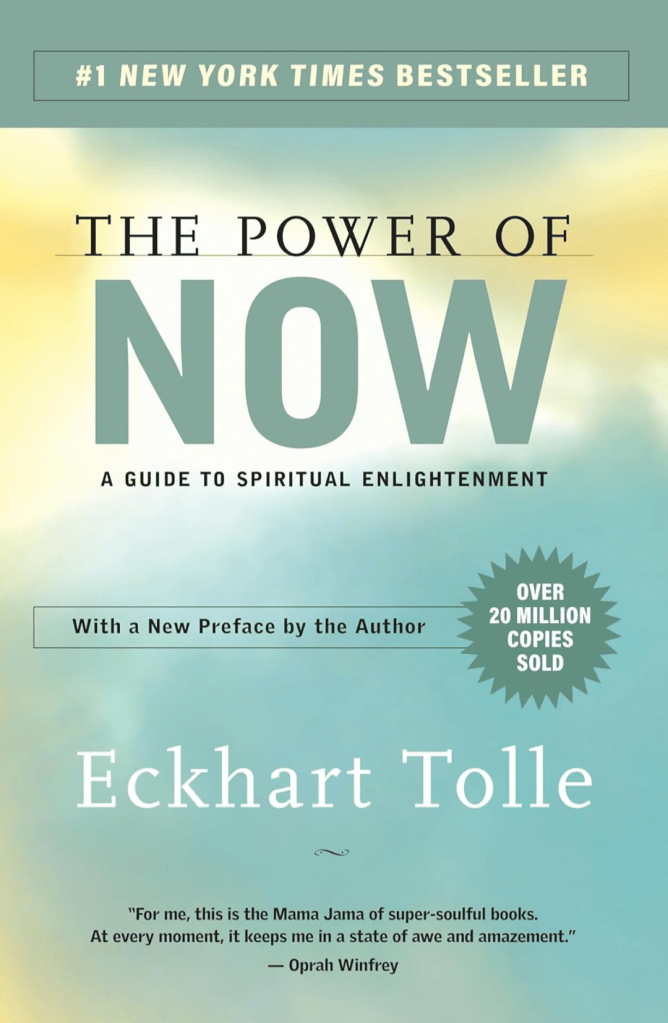
Have you ever noticed how much of your life is spent either replaying the past or worrying about the future? It’s a quiet habit most of us carry—one that often fuels stress, anxiety, and a sense of disconnection. The Power of Now by Eckhart Tolle offers a simple but profound idea: peace is only found in the present moment. This book isn’t just philosophy—it’s an invitation to experience life differently, right now. If you’ve ever felt mentally overwhelmed or stuck in overthinking, this book aims to show you another way.
What The Power of Now Is Really About
At its core, The Power of Now is about shifting your identity away from constant thinking and into awareness.
Tolle argues that:
- Most human suffering is created by the mind
- We are not our thoughts—we are the observer of them
- The present moment is the only place where life actually happens
Rather than presenting a traditional narrative, the book is structured as a series of questions and answers. This makes it feel less like a lecture and more like a guided conversation.
Key Concepts Explained Simply
1. You Are Not Your Mind
One of the book’s most powerful ideas is that your thoughts are not your identity.
Tolle suggests that constantly identifying with your thoughts creates:
- Anxiety (future-focused thinking)
- Regret (past-focused thinking)
- A loss of presence
Instead, he encourages observing thoughts without attaching to them.
This aligns with modern psychology concepts like cognitive defusion—the ability to step back from thoughts rather than be controlled by them.
2. The Present Moment Is All You Ever Have
Tolle emphasizes that:
- The past only exists as memory
- The future only exists as imagination
- The present is the only reality
This isn’t just philosophical—it’s practical.
When you bring attention to the present moment, you often notice:
- Reduced stress
- Increased clarity
- A sense of calm
3. The “Pain-Body” Concept
Tolle introduces the idea of the “pain-body”—a buildup of emotional pain from the past that lives inside you.
It can be triggered by:
- Conflict
- Stress
- Certain relationships
When activated, it can feel like:
- Sudden anger
- Emotional overwhelm
- Irrational reactions
The key, according to Tolle, is awareness. When you notice it, you weaken its control.
4. Acceptance vs Resistance
A major theme in the book is the idea that resistance creates suffering.
Tolle doesn’t mean passive acceptance of everything—but rather:
- Accept the present moment as it is
- Then act from clarity, not resistance
This subtle shift can dramatically change how you respond to challenges.
What Makes This Book Different
Unlike many self-help books, The Power of Now:
- Doesn’t focus on productivity or goals
- Doesn’t offer step-by-step systems
- Focuses entirely on awareness and consciousness
It’s closer to a spiritual guide than a traditional self-improvement manual.
For some readers, this is deeply transformative. For others, it can feel abstract or repetitive.
Strengths of The Power of Now
- Simple but profound ideas that stick with you
- Encourages real inner awareness, not just behavior change
- Can reduce anxiety when applied consistently
- Timeless message that doesn’t rely on trends
Potential Criticisms
To keep things grounded, it’s worth noting:
- The writing can feel repetitive
- Some concepts are abstract or hard to apply immediately
- It leans heavily into spiritual language, which may not resonate with everyone
If you prefer structured, science-based frameworks, this book may feel less concrete.
Practical Takeaways You Can Use Today
You don’t need to fully “master presence” to benefit from this book. Try these simple practices:
1. Pause and Observe
Several times a day, ask:
- “What am I thinking right now?”
Just noticing creates distance from the thought.
2. Focus on Sensation
Bring attention to:
- Your breath
- Your hands
- The feeling of walking
This anchors you in the present moment.
3. Accept the Moment (Then Act)
Instead of immediately reacting, try:
- “Can I allow this moment to be as it is?”
Then decide what to do next.
4. Reduce Mental Noise
Limit:
- Constant phone checking
- Multitasking
- Background distractions
Silence helps awareness grow.
Who This Book Is Best For
The Power of Now is especially helpful if you:
- Struggle with overthinking or anxiety
- Feel mentally overwhelmed
- Are interested in mindfulness or personal growth
- Want a deeper sense of calm and clarity
It may be less appealing if you prefer highly structured, action-based self-help books.
Check out more book reviews here!
Final Thoughts
The Power of Now isn’t a quick fix—it’s a perspective shift.
Some readers experience immediate clarity, while others need time to fully grasp its ideas. But at its best, this book gently reveals something most of us overlook: peace isn’t found by fixing your entire life—it’s found by stepping fully into this moment.
And that’s a skill worth practicing.
Call to Action
If this idea resonates with you, explore your own awareness more deeply by reading our [Beginner’s Guide to Mindfulness] or consider starting a simple daily presence practice.
 Mindful Explorer