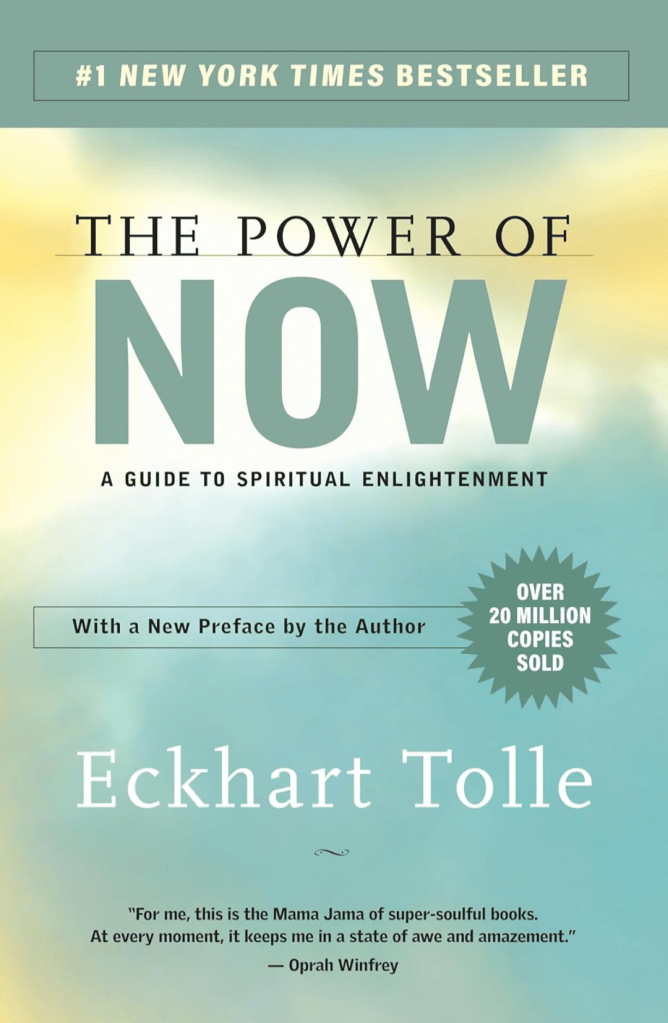
The Power of Now Book Review: A Guide to Living in the Present

A thoughtful review of The Power of Now by Eckhart Tolle, exploring its core ideas, practical value, and how it can transform your daily awareness.

Amazon Link

Have you ever noticed how much of your life is spent either replaying the past or worrying about the future? It’s a quiet habit most of us carry—one that often fuels stress, anxiety, and a sense of disconnection. The Power of Now by Eckhart Tolle offers a simple but profound idea: peace is only found in the present moment. This book isn’t just philosophy—it’s an invitation to experience life differently, right now. If you’ve ever felt mentally overwhelmed or stuck in overthinking, this book aims to show you another way.


What The Power of Now Is Really About

At its core, The Power of Now is about shifting your identity away from constant thinking and into awareness.

Tolle argues that:

  • Most human suffering is created by the mind
  • We are not our thoughts—we are the observer of them
  • The present moment is the only place where life actually happens

Rather than presenting a traditional narrative, the book is structured as a series of questions and answers. This makes it feel less like a lecture and more like a guided conversation.


Key Concepts Explained Simply

1. You Are Not Your Mind

One of the book’s most powerful ideas is that your thoughts are not your identity.

Tolle suggests that constantly identifying with your thoughts creates:

  • Anxiety (future-focused thinking)
  • Regret (past-focused thinking)
  • A loss of presence

Instead, he encourages observing thoughts without attaching to them.

This aligns with modern psychology concepts like cognitive defusion—the ability to step back from thoughts rather than be controlled by them.


2. The Present Moment Is All You Ever Have

Tolle emphasizes that:

  • The past only exists as memory
  • The future only exists as imagination
  • The present is the only reality

This isn’t just philosophical—it’s practical.

When you bring attention to the present moment, you often notice:

  • Reduced stress
  • Increased clarity
  • A sense of calm

3. The “Pain-Body” Concept

Tolle introduces the idea of the “pain-body”—a buildup of emotional pain from the past that lives inside you.

It can be triggered by:

  • Conflict
  • Stress
  • Certain relationships

When activated, it can feel like:

  • Sudden anger
  • Emotional overwhelm
  • Irrational reactions

The key, according to Tolle, is awareness. When you notice it, you weaken its control.


4. Acceptance vs Resistance

A major theme in the book is the idea that resistance creates suffering.

Tolle doesn’t mean passive acceptance of everything—but rather:

  • Accept the present moment as it is
  • Then act from clarity, not resistance

This subtle shift can dramatically change how you respond to challenges.


What Makes This Book Different

Unlike many self-help books, The Power of Now:

  • Doesn’t focus on productivity or goals
  • Doesn’t offer step-by-step systems
  • Focuses entirely on awareness and consciousness

It’s closer to a spiritual guide than a traditional self-improvement manual.

For some readers, this is deeply transformative. For others, it can feel abstract or repetitive.


Strengths of The Power of Now

  • Simple but profound ideas that stick with you
  • Encourages real inner awareness, not just behavior change
  • Can reduce anxiety when applied consistently
  • Timeless message that doesn’t rely on trends

Potential Criticisms

To keep things grounded, it’s worth noting:

  • The writing can feel repetitive
  • Some concepts are abstract or hard to apply immediately
  • It leans heavily into spiritual language, which may not resonate with everyone

If you prefer structured, science-based frameworks, this book may feel less concrete.


Practical Takeaways You Can Use Today

You don’t need to fully “master presence” to benefit from this book. Try these simple practices:

1. Pause and Observe

Several times a day, ask:

  • “What am I thinking right now?”

Just noticing creates distance from the thought.


2. Focus on Sensation

Bring attention to:

  • Your breath
  • Your hands
  • The feeling of walking

This anchors you in the present moment.


3. Accept the Moment (Then Act)

Instead of immediately reacting, try:

  • “Can I allow this moment to be as it is?”

Then decide what to do next.


4. Reduce Mental Noise

Limit:

  • Constant phone checking
  • Multitasking
  • Background distractions

Silence helps awareness grow.


Who This Book Is Best For

The Power of Now is especially helpful if you:

  • Struggle with overthinking or anxiety
  • Feel mentally overwhelmed
  • Are interested in mindfulness or personal growth
  • Want a deeper sense of calm and clarity

It may be less appealing if you prefer highly structured, action-based self-help books.


Check out more book reviews here!


Final Thoughts

The Power of Now isn’t a quick fix—it’s a perspective shift.

Some readers experience immediate clarity, while others need time to fully grasp its ideas. But at its best, this book gently reveals something most of us overlook: peace isn’t found by fixing your entire life—it’s found by stepping fully into this moment.

And that’s a skill worth practicing.


Call to Action

If this idea resonates with you, explore your own awareness more deeply by reading our [Beginner’s Guide to Mindfulness] or consider starting a simple daily presence practice.
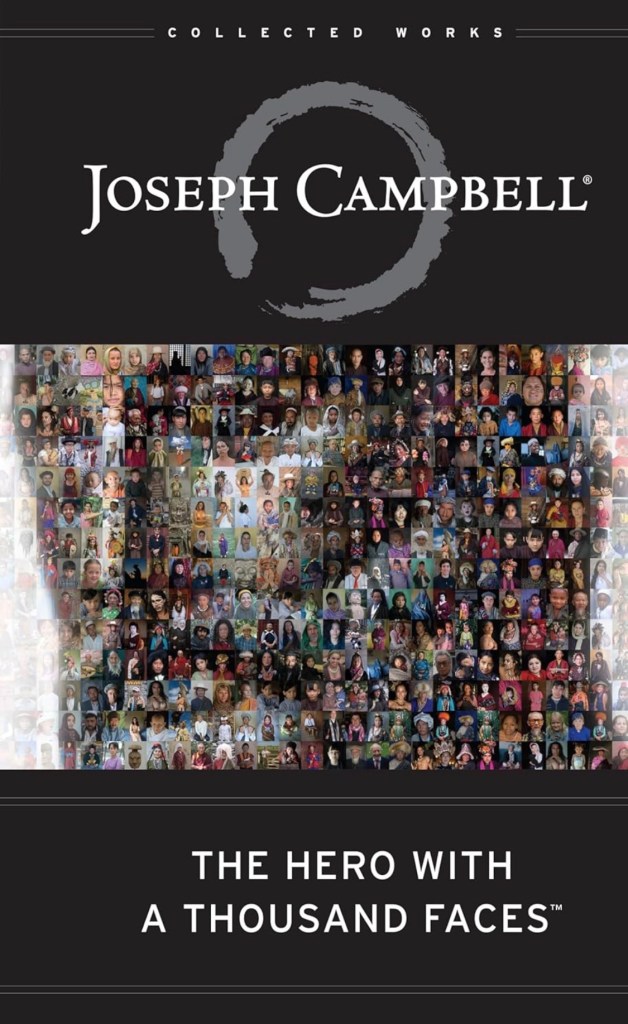

The Hero with a Thousand Faces — Summary & Review

Discover the timeless wisdom of The Hero with a Thousand Faces by Joseph Campbell — a journey through myth, psychology, and the universal path of transformation.

By Joseph Campbell (1949)

Amazon link

Introduction

The Hero with a Thousand Faces by Joseph Campbell is one of the most influential books in mythology, psychology, and storytelling. It explores a universal narrative structure found across cultures — what Campbell famously called “The Hero’s Journey” or the “Monomyth.”

This framework reveals that myths from every era and region share a deep psychological pattern: a hero leaves home, faces trials, gains wisdom, and returns transformed. Campbell uses examples from ancient myths, religious stories, and modern literature to show how this timeless cycle reflects the human search for meaning.

The Structure of the Hero’s Journey

Campbell identifies three main stages of the hero’s journey — Departure, Initiation, and Return — each containing several symbolic steps.

1. Departure

The hero begins in the ordinary world before being called to adventure.

Call to Adventure: Something disrupts the hero’s normal life. Refusal of the Call: Fear or doubt may cause hesitation. Supernatural Aid: A mentor or guide offers wisdom or tools. Crossing the Threshold: The hero leaves the familiar world behind.

2. Initiation

The hero faces trials that lead to inner growth.

Road of Trials: A series of challenges test the hero’s strength and morality. Meeting with the Goddess / Temptation: The hero encounters love or temptation that tests devotion. Atonement with the Father: The hero reconciles inner conflict or authority figures. Apotheosis: The hero achieves enlightenment or transformation. The Ultimate Boon: The hero gains the prize — wisdom, knowledge, or a sacred object.

3. Return

Having transformed, the hero must bring their gift back to the world.

Refusal of the Return: The hero may want to remain in peace or bliss. Magic Flight / Rescue from Without: Obstacles arise on the way back. Crossing the Return Threshold: The hero reintegrates into society. Master of Two Worlds: Balance is found between the spiritual and material. Freedom to Live: The hero accepts life’s impermanence and lives freely.

Themes and Insights

1. Myths as Mirrors of the Mind

Campbell draws on Carl Jung’s idea of archetypes — universal symbols rooted in the collective unconscious. Myths, he argues, are psychological maps showing humanity’s shared inner journey.

2. The Journey Within

The hero’s outer adventure mirrors an inner transformation. Every trial represents a confrontation with fear, desire, or ego. Thus, myth is not only about gods and warriors — it’s about you.

3. Modern Relevance

Campbell believed that modern society’s myths — found in movies, books, and personal stories — continue to express the same ancient truths. His work profoundly influenced creators like George Lucas, who modeled Star Wars directly on the Hero’s Journey.

Why It Matters Today

In a world often fragmented by distractions and doubt, The Hero with a Thousand Faces reminds us that growth comes through struggle and self-discovery. Whether facing career change, grief, or personal evolution, we are each called to adventure — to leave comfort behind, face the unknown, and return wiser.

Campbell’s central message:

“Follow your bliss, and doors will open where there were none before.”

Personal Review

Campbell’s writing is dense but deeply rewarding. The book blends mythology, psychology, and philosophy with poetic language that feels timeless. It’s more than academic—it’s a spiritual guide to living courageously.

Pros:

Profound psychological depth Universal relevance across cultures Inspires creative storytelling and personal reflection

Cons:

Archaic language and complex references Requires patience and rereading for full understanding

Verdict:

⭐️⭐️⭐️⭐️⭐️ (5/5) — A life-changing classic that transforms how you see stories, religion, and yourself.

Conclusion

The Hero with a Thousand Faces teaches that myth is not ancient fantasy but a living roadmap for transformation. Every person who steps beyond fear, pursues meaning, and returns with wisdom becomes the hero — wearing one of the “thousand faces” of humanity.

So the question remains:

What adventure is calling you next?

🔍 1984 by George Orwell: Summary, Meaning, and Why It Still Matters Today

Discover the timeless power of George Orwell’s 1984 — a chilling vision of a world ruled by surveillance, censorship, and lost freedom. This summary and analysis explore the novel’s plot, key themes, and why Orwell’s warning about truth and control still matters in today’s digital age.

Amazon link: 1984

If you’ve ever heard phrases like “Big Brother is watching you” or “doublethink,” you already know a little bit about George Orwell’s 1984 — even if you haven’t read it. Published in 1949, this dystopian novel imagines a future where truth, privacy, and individuality have been crushed by total government control. And more than 70 years later, its message still hits home.

📖 Quick Summary of 1984

Orwell sets 1984 in Oceania, one of three massive superstates locked in endless war. Society is ruled by the Party, led by the ever-present but possibly fictional Big Brother. Citizens are watched day and night through telescreens and microphones. Even thinking rebellious thoughts — called “thoughtcrime” — can get you killed.

Our main character, Winston Smith, works at the Ministry of Truth, where his job is to rewrite history to match whatever the Party claims is true. Deep down, Winston secretly despises the regime and dreams of finding real freedom.

💔 Love, Betrayal, and the Fight for Truth

Winston begins a secret love affair with Julia, a young woman who also hates the Party. Together, they rent a small apartment and believe they’ve found a place beyond Big Brother’s reach. But their happiness is short-lived — they’re betrayed, arrested by the Thought Police, and taken to the Ministry of Love.

There, Winston is tortured by O’Brien, a Party official who breaks his spirit, forcing him to betray Julia and accept the Party’s control. By the novel’s heartbreaking end, Winston is completely brainwashed and confesses that he “loves Big Brother.”

⚙️ Major Themes in 1984

🧠 1. Surveillance and Power

Orwell warns how surveillance can destroy personal freedom. In 1984, every action and emotion is monitored — a chilling reflection of modern concerns about technology and privacy.

🗣️ 2. Truth and Language

Through Newspeak — a simplified, restricted form of English — the Party controls how people think. If the language of rebellion doesn’t exist, rebellion itself becomes impossible.

🔓 3. Freedom and Resistance

Winston’s desire for truth and love shows the human spirit’s natural resistance to oppression. His failure reminds us how fragile freedom can be when fear and propaganda take over.

🌍 Why 1984 Still Matters Today

1984 isn’t just an old novel — it’s a timeless warning. In a world where misinformation spreads online, governments track data, and truth is constantly debated, Orwell’s story feels more relevant than ever.

Phrases like Big Brother, thoughtcrime, and doublethink have become part of everyday language because they reflect real dangers we still face today.

🕯️ Final Thoughts

Orwell didn’t write 1984 to predict the future — he wrote it to prevent it. The novel challenges us to stay alert, think critically, and protect truth in a world that often distorts it.

As long as we remember the lessons of 1984, there’s hope that Big Brother will remain fiction — not reality.

Amazon link: 1984