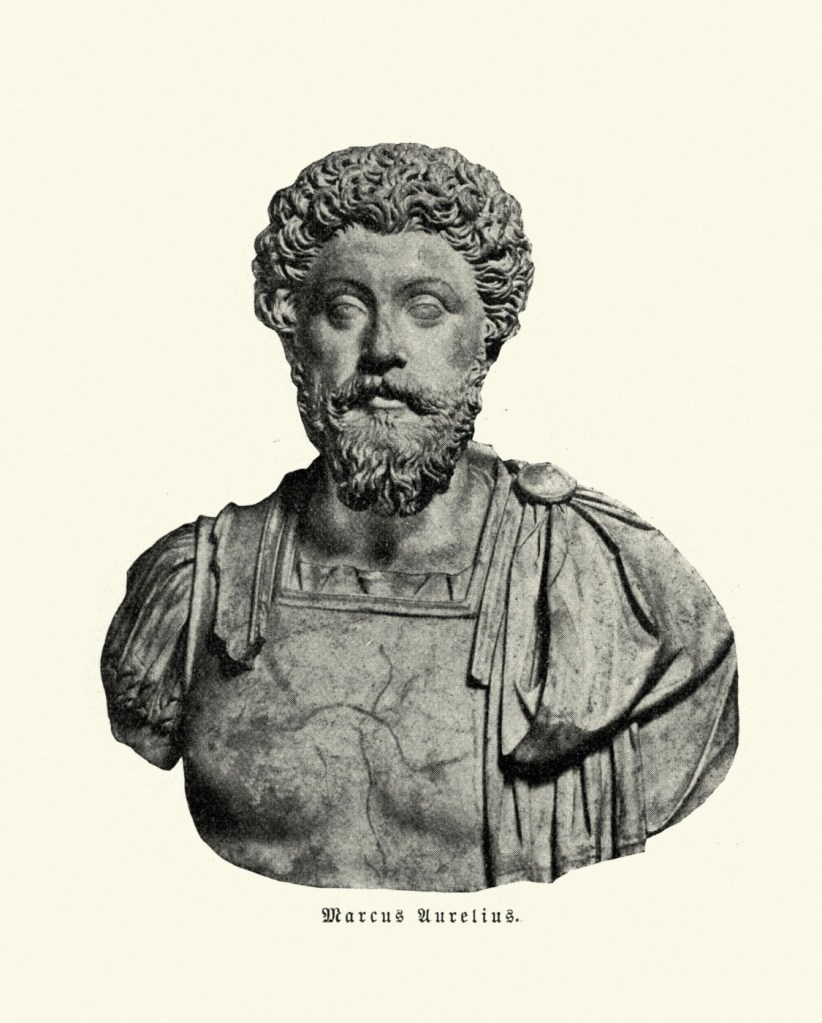
Marcus Aurelius: Stoic Wisdom for a Noisy Modern World

Explore Marcus Aurelius’ Stoic philosophy and how his quiet wisdom helps modern readers build resilience, clarity, and inner peace.

If you’ve ever felt overwhelmed by noise—notifications, opinions, constant urgency—you’re not alone. Two thousand years ago, a Roman emperor faced war, plague, betrayal, and political pressure on a scale most of us can’t imagine. And yet, he wrote reminders to himself about patience, humility, and inner calm.

That man was Marcus Aurelius.

What makes Marcus Aurelius extraordinary isn’t just that he ruled an empire. It’s that he used philosophy not to escape responsibility, but to meet it with steadiness. His private journal, later published as Meditations, has become one of the most enduring guides to mindful living—precisely because it was never meant to impress anyone.

This article explores who Marcus Aurelius was, what he believed, and why his Stoic wisdom still matters in the modern world.

Who Was Marcus Aurelius?

Marcus Aurelius Antoninus (121–180 CE) was the last of Rome’s “Five Good Emperors.” He ruled during a turbulent period marked by military conflict, economic strain, and the Antonine Plague.

Despite his power, Marcus never saw himself as exceptional.

He was:

A reluctant ruler rather than a glory-seeker A student of philosophy before a politician A deeply reflective person living in an unreflective world

Unlike many philosophers, Marcus did not write abstract treatises. Meditations is a collection of personal notes—self-reminders written during military campaigns, often at night, in tents near the front lines.

That intimacy is what gives the text its power.

Stoicism in Plain Language

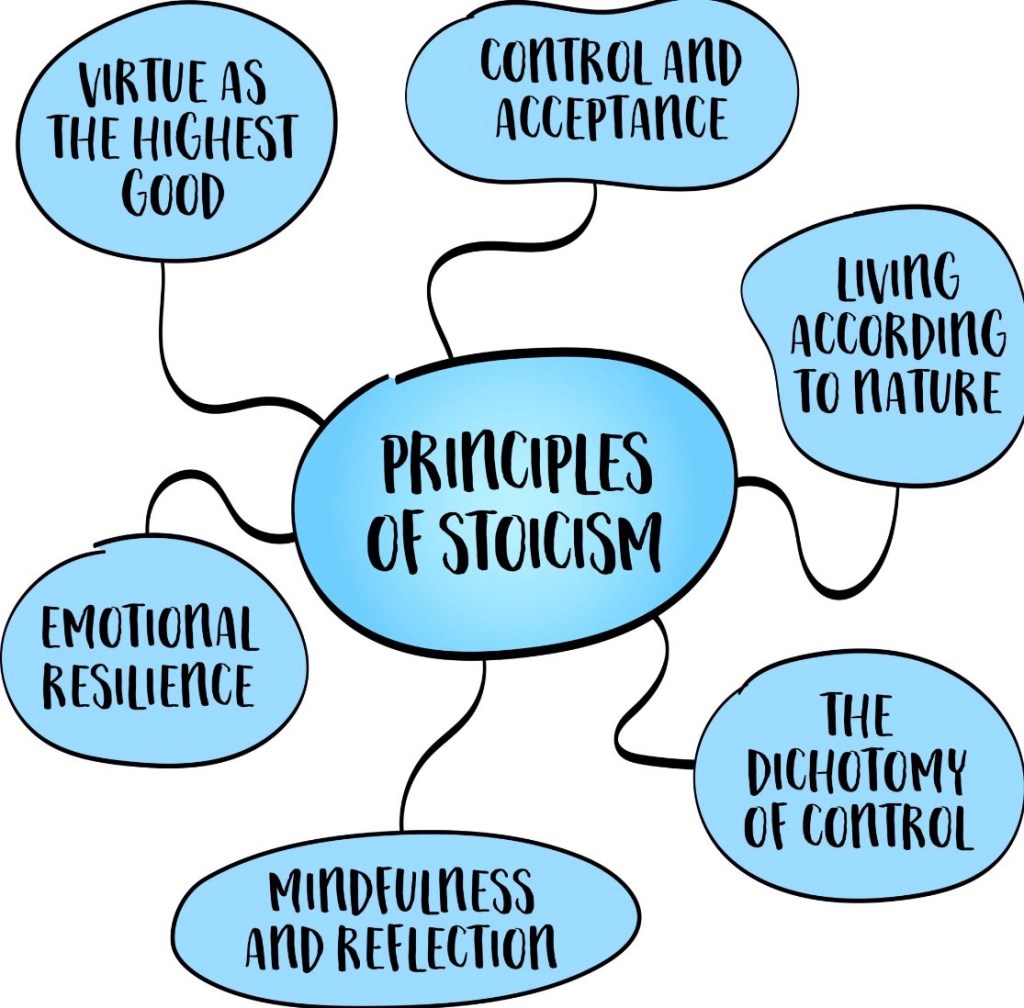
Stoicism is often misunderstood as emotional suppression. In reality, it’s about emotional clarity.

At its core, Stoicism teaches:

Focus on what you can control Accept what you cannot Act with virtue regardless of circumstance

Marcus returned to these ideas repeatedly—not because he mastered them, but because he struggled with them like anyone else.

The Dichotomy of Control

One of Marcus’ most practical insights is simple:

Some things are up to us. Some things are not.

He reminds himself that:

Other people’s opinions are not under his control The past and future are not under his control His judgments, intentions, and actions are

This distinction becomes a powerful antidote to anxiety. Much of our stress comes from trying to manage outcomes instead of responses.

Power Without Ego

What’s remarkable about Marcus Aurelius is how often he warns himself against arrogance.

He writes reminders like:

You are temporary You are no more important than others Praise and blame vanish quickly

This is not false humility—it’s realism.

Marcus understood that power amplifies character. Without inner discipline, authority leads to cruelty or excess. With discipline, it becomes service.

In a modern context—leadership roles, teaching, parenting, community work—this mindset remains deeply relevant.

Nature as a Moral Teacher

Marcus frequently uses nature as a grounding reference.

He observes:

Everything follows natural processes Decay and death are not failures but transitions Resistance to reality causes suffering

Rather than romanticizing nature, he treats it as a teacher of impermanence and cooperation.

This perspective aligns closely with modern ideas in mindfulness and ecological psychology: when we see ourselves as part of a larger system, our anxieties shrink to scale.

Why Meditations Still Resonates Today

Marcus Aurelius never intended Meditations to be published. That’s why it feels honest.

He writes about:

Anger he’s trying to restrain Fatigue from dealing with difficult people The temptation to avoid responsibility

These struggles feel strikingly modern.

In an age of personal branding and public performance, Marcus offers something rare: philosophy without an audience.

Practical Takeaways for Modern Life

Marcus Aurelius doesn’t offer hacks. He offers habits of thought.

Here are a few ways his wisdom translates today:

1. Start the Day with Mental Framing

Marcus reminded himself each morning that he would encounter difficult people—and that this was normal.

Try this: Before checking your phone, name three likely challenges of the day and how you intend to meet them calmly.

2. Shorten the Feedback Loop

He often notes how quickly fame, insult, and praise disappear.

Try this: When you feel reactive, ask: Will this matter in a year? A month? A week?

3. Practice Quiet Virtue

Marcus believed right action didn’t require recognition.

Try this: Do one helpful act each day without telling anyone.

4. Remember Impermanence—Gently

Rather than fearing death, Marcus used mortality to sharpen gratitude.

Try this: Notice one ordinary moment—walking, cooking, listening—and fully inhabit it.

Internal Links (Related Reading)

[Internal link: Stoicism and modern mental health] [Internal link: Mindfulness practices for everyday stress] [Internal link: Nature, impermanence, and meaning]

A Quiet Legacy

Marcus Aurelius never claimed enlightenment. He simply tried—again and again—to live with integrity under pressure.

That’s why his work endures.

In a culture obsessed with speed, outrage, and certainty, Marcus offers something slower and sturdier: attention, restraint, and responsibility.

You don’t need to be an emperor to benefit from that.

Soft Call-to-Action

If this kind of reflective philosophy resonates with you, consider subscribing to the Mindful Explorer newsletter for thoughtful essays on psychology, nature, and meaning—delivered calmly, not constantly.

For an easy yet thought provoking read on Stoic philosophy check out The Daily Stoic.

If you’re looking for something more in depth, pick up a copy of Meditations written by Marcus Aurelius himself.

📱 Why Smartphone Boundaries Are an Act of Self-Respect

Why smartphone boundaries are essential for attention, creativity, and mental clarity. A mindful approach to technology that restores agency and depth.

We don’t lack discipline—we lack boundaries

The modern smartphone is a marvel: a map, a library, a studio, a marketplace, and a social space all in one. But without boundaries, it quietly becomes something else—a habitat instead of a tool.

And when we live inside our phones, we slowly abandon the places where meaning actually forms: silence, boredom, nature, deep focus, and unbroken thought.

Smartphone boundaries aren’t about rejection or technophobia.

They’re about self-respect.

Attention is a finite natural resource

We talk about time management, but time isn’t the real currency—attention is.

Attention fuels:

creativity emotional regulation learning memory long-term life design

Smartphones fragment attention by design. Notifications, infinite scroll, and variable rewards train the brain toward constant novelty and reactivity.

The result isn’t laziness.

It’s shallowness without intention.

Creativity doesn’t disappear from lack of effort—it disappears from interruption.

The nervous system cost of constant connection

Even “neutral” phone use keeps the nervous system lightly activated:

shallow breathing background anxiety impatience reduced tolerance for stillness

This low-grade stimulation prevents the mental exhale required for insight, reflection, and emotional depth.

Boundaries restore rhythm.

Boredom is not the enemy

Boredom has been unfairly maligned.

In reality, boredom is the threshold state where:

melodies emerge essays begin forming clarity about life decisions appears

Smartphones eliminate boredom instantly—and with it, the quiet conditions that generate original thought.

When boredom disappears, creativity follows.

Boundaries are not restriction—they’re alignment

Healthy smartphone boundaries aren’t about using your phone less.

They’re about using it in alignment with your values.

Instead of asking:

“Should I be on my phone right now?”

Try asking:

“Is my phone helping me become the person I’m trying to be?”

Boundaries shift the phone from default behavior to intentional choice.

Simple boundaries with outsized impact

You don’t need a digital detox or a monk’s discipline.

A few structural shifts create disproportionate benefits.

High-leverage boundaries:

No phone for the first hour after waking Phone-free deep work blocks Designated check-in windows for email and social media No scrolling during nature time Phone charging outside the bedroom

These are not rules—they’re protective containers for attention.

Nature is the ultimate counterbalance

Time outdoors without a phone recalibrates perception.

Colors sharpen.

Thoughts slow.

Perspective widens.

This is not accidental—humans evolved to regulate attention through landscape, not screens. Protecting phone-free nature time is one of the most powerful mental health practices available.

A quiet truth

Most people aren’t addicted to their phones.

They’re disconnected from meaning, and phones offer a constant substitute.

Boundaries don’t remove technology—they restore agency.

A mindful closing practice

Before unlocking your phone, pause and ask:

“What am I hoping this will give me?”

If the answer is unclear, don’t unlock it.

That single pause is the beginning of intentional living.

Final reflection

Smartphone boundaries are not about control.

They are about care.

Care for attention.

Care for creativity.

Care for the inner landscape where a meaningful life is shaped.

Shinrin-Yoku: How Forest Bathing Improves Mental Health

Shinrin-yoku, or forest bathing, is a Japanese practice shown to reduce stress, improve mood, and support immune health—no hiking required.

Modern life keeps your nervous system on high alert—screens, schedules, noise, and constant decision-making. Many people try to “relax” by staying busy in different ways, yet still feel tense and scattered. Shinrin-yoku, often translated as forest bathing, offers a radically simple alternative: slow down and immerse your senses in a natural environment. No fitness goal. No destination. Just presence.

This article explores what shinrin-yoku actually is, what science suggests about its benefits, and how you can practice it—whether you live near deep woods or a small city park.

What Is Shinrin-Yoku?

Shinrin-yoku (森林浴) literally means “taking in the forest atmosphere.” The term was coined in the early 1980s in Japan as a public-health response to rising stress, burnout, and lifestyle-related illness.

Unlike hiking or outdoor exercise, shinrin-yoku emphasizes:

Slow movement Sensory awareness Non-goal-oriented time in nature

You are not trying to reach a viewpoint, track steps, or improve performance. You are simply being with the forest.

The Psychology Behind Forest Bathing

Stress Reduction and the Nervous System

One of the most consistent findings in shinrin-yoku research is its effect on the stress response. Time spent in forests is associated with:

Lower cortisol (the primary stress hormone) Reduced heart rate Lower blood pressure

From a psychological standpoint, this reflects a shift from sympathetic nervous system dominance (fight-or-flight) toward parasympathetic activation (rest-and-digest).

In practical terms: your body gets the signal that it is safe to relax.

Attention Restoration Theory

Psychologists describe something called Attention Restoration Theory (ART). The idea is simple:

Urban life demands directed attention (focus, inhibition, constant choice) Nature engages soft fascination (gentle, effortless attention)

When you walk through a forest, your attention is held by:

Leaves moving in the wind Variations of light and shadow Birdsong and natural textures

This allows the brain’s executive systems to rest, often leading to:

Improved concentration afterward Reduced mental fatigue A calmer, clearer mental state

Physical Health Benefits (Beyond Relaxation)

Immune Support and Phytoncides

Trees release natural compounds called phytoncides—aromatic oils that help protect plants from insects and pathogens. When humans inhale these compounds, studies suggest they may:

Increase activity of natural killer (NK) cells Support immune regulation Reduce inflammation markers

While shinrin-yoku is not a medical treatment, it appears to support the body’s baseline resilience.

Sleep and Mood

Regular exposure to natural environments is linked to:

Better sleep quality Reduced symptoms of anxiety and depression Improved overall mood stability

Importantly, these effects often persist for days after a forest-bathing session—especially when practiced consistently.

How to Practice Shinrin-Yoku (Step by Step)

1. Choose the Right Setting

Ideal locations include:

Forest preserves Nature reserves Botanical gardens Quiet parks with dense trees

The space does not need to be remote or wild. What matters most is relative quiet and greenery.

2. Slow Down—A Lot

Move at about half your normal walking speed. If you feel impatient, that’s a sign it’s working.

Pause often. Sit if you feel drawn to it.

3. Engage the Senses

Instead of thinking about nature, experience it directly:

Sight: textures, colors, depth Sound: wind, birds, leaves Smell: soil, bark, greenery Touch: tree bark, stones, air temperature

There is no need to label or analyze what you notice.

4. Leave the Phone Behind

Photos and tracking apps shift attention outward again. If safety requires a phone, keep it on silent and out of reach.

5. Aim for 20–40 Minutes

Research suggests benefits begin around 20 minutes, with deeper effects as sessions approach 40–60 minutes.

Common Misconceptions

“It Only Works in Wild Forests”

False. Even modest green spaces can provide benefits—especially if visited regularly.

“It’s Just a Walk”

Not quite. The intention and attentional quality are what distinguish shinrin-yoku from exercise.

“You Have to Believe in It”

No belief required. Many effects occur at the physiological level, regardless of expectations.

Practical Takeaways

Schedule one forest-bathing session per week if possible Pair it with journaling or quiet reflection afterward Treat it as mental hygiene, not a productivity tool Think of nature as a regulator, not an escape

Small, consistent exposure often matters more than occasional long trips.

If this approach resonates with you, consider subscribing to the Mindful Explorer newsletter for calm, research-grounded reflections on psychology, nature, and intentional living.

Quantum Immortality: What the Thought Experiment Really Says About Life

Quantum immortality suggests you never experience your own death. Explore what this idea really means, where it comes from, and why it matters psychologically.

Have you ever wondered—quietly, maybe late at night—what it would be like to never experience your own death? Not to live forever in a fantasy sense, but to never encounter the moment where everything stops?

The idea of quantum immortality claims something strange: that from your own perspective, consciousness always continues. Death happens in some versions of reality—but not the one you experience.

This thought experiment sits at the intersection of physics, philosophy, and psychology. And while it’s often misunderstood (or sensationalized), it raises deeply human questions about fear, meaning, and how we relate to mortality.

This article unpacks what quantum immortality actually is—and why it’s far more about how we live than whether we can escape death.

What Is Quantum Immortality? (In Plain Language)

Quantum immortality is a thought experiment, not a proven scientific theory. It grows out of a particular interpretation of quantum mechanics called the Many-Worlds Interpretation.

The simplified idea goes like this:

Every time a truly random quantum event occurs, reality splits into multiple outcomes. In some versions of reality, you survive. In others, you do not. Conscious experience, the argument goes, can only continue in the branches where you remain alive.

From inside consciousness, death is never experienced—only survival.

This leads to the unsettling claim: you always find yourself alive, no matter how unlikely survival becomes.

Where the Idea Comes From: Schrödinger’s Cat, Revisited

Quantum immortality is closely related to the famous Schrödinger’s Cat thought experiment.

In that scenario:

A cat is placed in a box with a quantum-triggered poison. Until observed, the cat is both alive and dead. Observation collapses the outcome.

Quantum immortality replaces the cat with you.

Instead of the universe choosing one outcome, all outcomes exist simultaneously. From the inside, consciousness only “tracks” the timelines where it continues.

Important distinction:

This does not mean you are physically immortal.

It means that subjective experience might never include the moment of non-experience.

Why Scientists Don’t Take It Literally

Physicists generally view quantum immortality with skepticism—and for good reasons.

Key problems with the idea

Unfalsifiable: There’s no way to test whether consciousness “jumps” timelines. Biology still fails: Survival doesn’t guarantee health, coherence, or quality of life. Anthropic bias: We only observe realities compatible with observation—this doesn’t imply immortality.

Most physicists see quantum immortality as an interesting philosophical edge case, not a description of reality.

The Psychological Pull: Why This Idea Grabs Us

Quantum immortality is compelling not because it’s true—but because it speaks directly to human fear.

What it emotionally offers

A sense of continuity Relief from death anxiety A feeling of cosmic significance

Psychologically, it mirrors older ideas:

Eternal soul Reincarnation Afterlife persistence

But instead of religion, it uses the language of physics—making it feel modern, rational, and safe.

The Hidden Danger: How the Idea Can Be Misused

Some online discussions dangerously misinterpret quantum immortality as a reason to take reckless risks.

This is a misunderstanding.

Even within the thought experiment:

Countless versions of you suffer, deteriorate, or die Survival does not imply well-being Consciousness could persist in increasingly fragile states

From a mental health perspective, the idea should never be used to justify harm or risk-taking.

A More Useful Interpretation: Mortality Shapes Meaning

Seen more carefully, quantum immortality points to something quieter and more grounded:

We never experience non-existence—only existence.

This is already true, without quantum mechanics.

Every moment you experience is a moment before death. The unknown isn’t what death feels like—it’s what living well feels like right now.

Instead of asking:

“Will I survive in some universe?”

A more helpful question is:

“How present am I in this one?”

What Quantum Immortality Teaches Us (Without Taking It Literally)

Here’s the grounded takeaway—no metaphysics required:

You only ever experience being alive Meaning is constructed moment by moment Fear of death often distracts from attention to life

Psychologically, this aligns with research showing that:

Acceptance of mortality increases life satisfaction Mindfulness reduces death anxiety Meaning grows from engagement, not permanence

Practical Takeaways for Everyday Life

You don’t need to believe in quantum immortality to learn from it.

Try this instead

Notice moments where you’re fully present Treat attention as finite and valuable Choose actions that improve this timeline

Ask yourself:

What am I postponing because I assume “later”? Where am I numbing instead of engaging? What version of myself am I actively reinforcing?

A Gentle Closing Thought

Quantum immortality doesn’t promise eternal life. What it quietly suggests is something more human:

You are always alive until you aren’t.

And that makes this moment—not some hypothetical universe—the one that matters.

🐠 The Yellow Boxfish: A Gentle Reminder That Nature Loves the Unusual

Discover the yellow boxfish, a cube-shaped reef fish whose slow movement, toxins, and design reveal surprising lessons about evolution and resilience.

If you’ve ever watched a reef documentary and paused when a bright yellow, cube-shaped fish drifted calmly across the screen, you’re not alone. The yellow boxfish looks like something a child might design with building blocks—simple, cheerful, and oddly out of place in the fast, flowing chaos of the ocean.

But this fish isn’t clumsy or accidental. The yellow boxfish is a quiet evolutionary success story. Its unusual shape, gentle swimming style, and built-in chemical defenses tell us something deeper about how nature solves problems—not always through speed or aggression, but through patience, structure, and balance.

This article explores why the yellow boxfish matters—and what it can teach us about adaptation, protection, and being different in a world that rewards sameness.

4. What Is the Yellow Boxfish?

The yellow boxfish (Ostracion cubicus) is a tropical reef fish found throughout the Indo-Pacific, including coral reefs near Southeast Asia, Australia, and parts of the Indian Ocean.

Key characteristics:

Bright yellow body (especially vivid in juveniles) Distinct cube-like shape Small fins used for slow, precise movement Dark spots scattered across the body Calm, deliberate swimming behavior

Unlike streamlined fish designed for speed, the yellow boxfish looks rigid and boxy—yet it thrives.

5. Why Is the Yellow Boxfish Cube-Shaped?

At first glance, the boxfish’s shape seems like a design flaw. But biologically, it’s a brilliant solution.

The bony exoskeleton

Instead of flexible scales, the yellow boxfish has a hard, interlocking bony armor called a carapace. This structure:

Protects against predators Prevents crushing bites Maintains a stable internal shape

This rigid armor limits flexibility—but dramatically increases survival.

🧠 Psychology of nature insight:

Not all resilience comes from flexibility. Sometimes strength comes from boundaries.

6. How Does the Yellow Boxfish Move?

Despite its stiff body, the yellow boxfish is surprisingly agile.

Rather than using its tail for propulsion like most fish, it relies on:

Pectoral fins (sides) Dorsal fin (top) Anal fin (bottom)

This style of motion—called ostraciiform swimming—allows precise hovering and maneuvering around coral.

Why slow works

Coral reefs are complex, not open highways Precision matters more than speed. Slow movement conserves energy

The yellow boxfish doesn’t chase—it navigates.

7. A Hidden Defense: Toxic Protection

One of the yellow boxfish’s most remarkable traits is invisible.

When threatened or stressed, it can release a toxin called ostracitoxin into the surrounding water. This toxin:

Can paralyze or kill nearby fish Makes predators think twice Is effective even without a chase

Importantly, the toxin is a last resort, not a constant weapon.

🌿 Nature principle:

True power doesn’t need constant display. It works quietly, only when necessary.

8. Juvenile vs Adult Yellow Boxfish

Juvenile yellow boxfish are iconic—bright yellow with bold black spots. Adults, however, often change:

Colors may dull or shift Patterns become less pronounced Body shape remains box-like

This change reflects a broader pattern in nature: early life stages often rely on visual warning signals, while adults depend more on size, toxins, or experience.

9. What the Yellow Boxfish Teaches Us About Adaptation

From a mindful perspective, the yellow boxfish offers several quiet lessons:

1. There is more than one way to survive

Speed, aggression, and dominance aren’t the only successful strategies.

2. Protection can look gentle

The fish appears calm and harmless—but carries strong defenses.

3. Constraints can create elegance

Its rigid body forces creative movement, not limitation.

In psychology, we often talk about adaptive strategies—ways individuals learn to work with their traits instead of against them. The yellow boxfish embodies this idea perfectly.

10. Conservation and Reef Health

Like many reef species, the yellow boxfish depends on healthy coral ecosystems. Threats include:

Coral bleaching Pollution Climate-driven temperature changes Reef habitat destruction

Protecting reefs doesn’t just preserve biodiversity—it protects entire networks of slow, subtle creatures whose value isn’t immediately obvious.

🪸 When reefs collapse, the quiet specialists disappear first.

11. Practical Takeaways (Mindful Living Meets Nature)

Here’s how the yellow boxfish’s story can translate into daily life:

Work with your structure, not against it Some people thrive on flexibility; others on routine and boundaries. You don’t need to rush to be effective Precision and consistency often outperform speed. Gentleness and strength can coexist Calm presence doesn’t mean lack of power.

These lessons align closely with research on sustainable performance, burnout prevention, and psychological well-being.

If you enjoy thoughtful explorations of nature, psychology, and mindful living, consider subscribing to the Mindful Explorer newsletter for calm, curiosity-driven insights each week.

🎄 Fun Christmas Traditions That Bring Joy Without the Stress

Discover fun Christmas traditions that create warmth, meaning, and connection—without pressure. Simple ideas for mindful, joyful holidays.

Christmas traditions can either ground us—or quietly exhaust us. Many adults feel torn between recreating nostalgic magic and managing modern schedules, budgets, and emotional bandwidth. The good news? Traditions don’t have to be elaborate, expensive, or inherited to be meaningful.

The most memorable Christmas rituals often share one quality: they slow us down just enough to feel connected—to each other, to nature, and to ourselves. This article explores fun, low-pressure Christmas traditions that spark joy while honoring simplicity, presence, and real human warmth.

Why Traditions Matter (Psychology & Well-Being)

Research in psychology suggests rituals help regulate emotion, increase belonging, and create a sense of continuity—especially during seasonal transitions. Traditions act as anchors in time. They don’t need perfection; they need repetition and intention.

Well-chosen traditions:

Reduce decision fatigue during busy seasons Create shared meaning without forcing conversation Offer comfort during grief or change Build memory “markers” we carry into adulthood

The key is choosing traditions that serve your energy, not drain it.

Fun Christmas Traditions That Feel Warm (Not Performative)

1. 🎁 One-Gift Rule Night

Instead of spreading gifts across the entire day, choose one meaningful gift to open together in the evening.

Why it works:

Shifts focus from consumption to presence Builds anticipation Encourages gratitude and storytelling

Variation: Pair the gift with a handwritten note explaining why it was chosen.

2. 🕯️ Candlelight December Evenings

Pick one or two evenings in December to turn off overhead lights and use only candles or soft lamps.

Instrumental music or acoustic guitar Tea, cocoa, or mulled cider Quiet reading or conversation

This simple sensory shift signals calm to the nervous system.

3. 🌲 Nature Walk on Christmas Morning

Before screens or social obligations, take a short walk outside—alone or together.

Psychological benefits:

Movement reduces cortisol Nature restores attention Quiet reflection balances stimulation

Even urban environments count. The point is not rushing.

4. 🎶 Soundtrack of the Season

Instead of constant Christmas music, curate one intentional playlist and play it only during specific moments:

Decorating Baking Evening wind-down

This turns music into a cue for presence rather than background noise.

Creative & Lighthearted Traditions

5. 🎄 Ornament With a Story

Each year, add one ornament tied to a real event:

A place you visited A challenge you overcame A new skill or idea

Over time, your tree becomes a visual timeline of lived experience.

6. 📖 Christmas Eve Reading Ritual

Choose a short story, poem, or reflective passage to read aloud each year.

Ideas:

Nature writing Folktales Seasonal essays

This tradition works beautifully for adults—especially those who’ve outgrown Santa but still crave ritual.

Food-Centered Traditions That Stay Simple

7. 🍲 One Signature Dish Only

Instead of a full spread, commit to one dish that defines the holiday for you.

Benefits:

Less overwhelm Strong sensory memory Easy continuity year to year

Everything else becomes optional.

8. ☕ Morning Beverage Ritual

Designate a special Christmas morning drink:

Spiced coffee Herbal tea blend Hot cocoa with one specific topping

Drink it slowly, intentionally, without multitasking.

Quiet Traditions for Solo or Small Celebrations

Not everyone celebrates in large groups—and that’s okay.

9. ✍️ Year-End Reflection Letter

Write yourself a short letter answering:

What did this year teach me? What do I want to carry forward? What can I release?

Seal it and read it next Christmas.

10. 🔥 Letting-Go Ritual

Write one thing you’re ready to release—stress, habits, expectations—and safely burn or tear the paper.

This creates emotional closure without forced positivity.

Practical Takeaways (Mindful & Actionable)

Choose fewer traditions, repeat them consistently Let traditions match your current life stage Build rituals around senses (light, sound, taste, movement) Release traditions that feel obligatory Remember: meaning comes from attention, not scale

Related Mindful Explorer Reads

[Internal link: Mindful holiday routines for adults] [Internal link: How rituals reduce stress and increase meaning] [Internal link: Nature-based seasonal living practices]

Soft Call-to-Action

If you enjoy reflections like this, consider subscribing to the Mindful Explorer newsletter—quiet insights for thoughtful living, delivered gently.

The Healing Power of Tai Chi: How Slow Movement Transforms Health

Tai Chi is a gentle, mindful practice that strengthens the body, calms the mind, and improves balance, flexibility, and overall well-being. Discover how this ancient art can enhance your health at any age.

What Is Tai Chi?

Tai Chi (also spelled Taiji or Tai Chi Chuan) is an ancient Chinese martial art rooted in Taoist philosophy. Known for its graceful, flowing movements, Tai Chi combines meditation, balance, and breath control to harmonize the mind and body.

Often described as “meditation in motion,” it emphasizes inner awareness rather than outward strength. Though it began as a martial discipline, Tai Chi is now practiced worldwide as a gentle form of exercise and mindfulness suitable for all ages.

1. Improves Balance and Coordination

One of Tai Chi’s most celebrated benefits is its ability to enhance balance. By shifting weight slowly and intentionally through controlled postures, practitioners develop:

Stronger leg muscles and core stability Improved coordination and body awareness Reduced risk of falls, especially in older adults

Research shows that consistent Tai Chi practice can significantly lower fall rates among seniors, making it a cornerstone of healthy aging.

2. Reduces Stress and Anxiety

Tai Chi’s rhythmic, mindful movements promote a state of calm focus, similar to meditation. Controlled breathing lowers cortisol levels, while the emphasis on present-moment awareness helps release mental tension.

Many practitioners report:

Better mood regulation Reduced anxiety and depression Deeper emotional resilience

Practicing Tai Chi even 10–15 minutes daily can bring noticeable changes in mental clarity and peace.

3. Enhances Cardiovascular and Respiratory Health

Although it appears gentle, Tai Chi engages nearly every muscle group and encourages deep, controlled breathing, improving oxygen flow and circulation. Over time, this can:

Strengthen the heart and lungs Lower blood pressure Improve endurance and energy levels

Studies have found Tai Chi beneficial for people managing hypertension, heart disease, and chronic respiratory issues.

4. Builds Strength Without Strain

Unlike high-impact workouts, Tai Chi develops functional strength through fluid resistance rather than force. Movements engage the legs, hips, arms, and core, enhancing muscle tone without overexertion or joint stress.

This makes it ideal for:

Older adults Individuals recovering from injuries People with arthritis or chronic pain

5. Improves Flexibility and Joint Health

The gentle, circular motions of Tai Chi encourage joint mobility and connective tissue flexibility. With regular practice, stiffness decreases, and range of motion improves.

It’s particularly effective for those managing conditions like fibromyalgia or osteoarthritis, helping reduce pain and inflammation naturally.

6. Strengthens the Immune System

Tai Chi may boost immune response by lowering stress hormones and improving circulation of white blood cells. One study found that older adults who practiced Tai Chi regularly showed higher antibody levels and fewer respiratory infections compared to non-practitioners.

7. Supports Cognitive and Emotional Health

Tai Chi requires focus, memory, and coordination — all of which stimulate neural plasticity and brain health. Regular practitioners often experience:

Sharper attention and memory Slower age-related cognitive decline A deeper sense of mindfulness and self-awareness

8. Encourages Mind-Body Harmony

Perhaps Tai Chi’s greatest gift is inner balance — the harmony between physical movement, breath, and thought. It embodies the Taoist principle of yin and yang, reminding us to move through life with both strength and softness.

Practicing Tai Chi nurtures not only the body, but also the spirit of patience, presence, and peace.

Getting Started with Tai Chi

You don’t need special equipment or a gym — just comfortable clothing and an open mind. Start with:

Local classes or community park groups Online tutorials for beginners A simple daily goal of 10 minutes of mindful movement

Remember: Tai Chi is less about perfection and more about consistency and awareness.

Final Thoughts

Tai Chi is more than an exercise — it’s a way of life that promotes health, longevity, and inner tranquility. Whether you seek physical vitality, emotional healing, or mental clarity, its slow, flowing movements offer a timeless path to well-being.

So the next time you step outside, pause, breathe deeply, and let the world move in harmony with you.

Have you tried it yet?

Lucid Dreaming: Unlocking Awareness in Your Sleep

Lucid dreaming lets you become aware within your dreams, offering creative, emotional, and therapeutic benefits. Learn how to start lucid dreaming safely.

Pick up a Dream Journal on Amazon

What Is Lucid Dreaming?

Lucid dreaming happens when you become aware that you’re dreaming while still inside the dream. This awareness gives you the unique ability to influence your dream’s environment, characters, and story — like directing your own personal movie in real time.

Some people experience brief moments of lucidity, while others can train themselves to gain full control, flying through the sky, solving problems, or exploring creative ideas while asleep.

The Science Behind It

Researchers link lucid dreaming to heightened activity in the prefrontal cortex, the part of your brain responsible for decision-making and self-awareness. During REM (rapid eye movement) sleep — the phase when most vivid dreams occur — the brain normally relaxes this region. But in lucid dreamers, it appears partially active, allowing for conscious thought inside the dream state.

Benefits of Lucid Dreaming

Creativity boost: Artists, writers, and musicians use lucid dreaming to generate ideas. Nightmare control: You can face fears directly, changing scary dreams into positive outcomes. Emotional healing: Revisiting memories or visualizing positive change can reduce anxiety. Skill practice: Athletes and performers report improved performance after practicing moves in lucid dreams. Exploration and curiosity: Many people simply enjoy the boundless freedom of dream worlds.

How to Induce Lucid Dreams

Reality checks: Ask yourself throughout the day, “Am I dreaming?” Look for clues — clocks that shift, text that changes, or strange logic. Dream journal: Write your dreams immediately after waking. This improves dream recall and awareness. Mnemonic Induction (MILD): Before sleep, repeat a phrase like, “Next time I’m dreaming, I’ll know I’m dreaming.” Wake Back to Bed (WBTB): Wake up after 5–6 hours of sleep, stay awake for 20 minutes, then go back to bed while focusing on dreaming consciously. Meditation and mindfulness: A clear, focused mind during the day makes lucidity more likely at night.

Risks and Considerations

Lucid dreaming is generally safe, but frequent practice can sometimes cause:

Sleep disruption from waking up too often Vivid or unsettling dream experiences Confusion between dream and waking memories (rare)

It’s important to maintain a healthy sleep schedule and practice grounding techniques if you ever feel disoriented upon waking.

Lucid Dreaming and the Future of Sleep Research

Modern neuroscience is exploring lucid dreaming for mental health therapy, especially for PTSD and recurrent nightmares. With advances in brain imaging and sleep tracking, scientists are finding new ways to interact with dreamers in real time — bridging the gap between consciousness and the dream world.

Final Thoughts

Lucid dreaming offers a fascinating bridge between imagination and awareness. Whether you want to conquer fears, boost creativity, or simply explore your subconscious, developing lucidity can open extraordinary dimensions of the mind — all from the comfort of your own bed.

What would you do if you realized you were dreaming tonight?

Pick up a Dream Journal on Amazon and track your dreams!

🌀 The Tao Te Ching: History and Analysis of an Ancient Masterpiece

Explore the Tao Te Ching by Laozi — an ancient guide to harmony, balance, and effortless living through Taoist philosophy.

Published on Substratum

Known as the wisest book ever written. It is said that you could read it in an afternoon, but you could study it for a lifetime.

🌿 Introduction

Few works of philosophy have influenced as many people for as long as the Tao Te Ching. Written over 2,500 years ago, this brief yet profound text continues to shape Eastern and Western thought alike. Its poetic reflections on balance, humility, and harmony have inspired leaders, artists, spiritual seekers, and scholars across centuries.

In this article, we’ll explore the history, authorship, and key ideas of the Tao Te Ching — and why its wisdom remains timeless.

📜 Origins and Authorship

The Tao Te Ching (道德經) — translated roughly as “The Classic of the Way and Virtue” — is traditionally attributed to Laozi (Lao Tzu), a semi-mythical philosopher thought to have lived in the 6th century BCE.

According to legend, Laozi served as a record keeper in the Zhou Dynasty court. Disillusioned by corruption and social decline, he decided to leave China, but before departing, a border guard named Yinxi recognized him and asked for his wisdom. Laozi then composed the Tao Te Ching — about 5,000 Chinese characters — and disappeared into the west.

While this story is likely apocryphal, the text itself emerged from early Daoist (Taoist) traditions that sought to align human life with the natural order of the universe. Scholars now believe the Tao Te Ching was compiled gradually between the 4th and 3rd centuries BCE, reflecting layers of oral wisdom and poetic thought.

📚 The Meaning of “Tao” and “Te”

Tao (道) means the Way — not just a path, but the fundamental order and flow of the universe. It is the source of all things, yet it cannot be defined or named. Te (德) means virtue or power — the manifestation of the Tao in the world through one’s actions, character, and alignment with nature.

Together, “Tao Te Ching” can be translated as “The Book of the Way and Its Virtue.”

🧘‍♂️ Key Themes and Philosophical Ideas

1. Wu Wei (無為): Effortless Action

One of the central ideas of the Tao Te Ching is wu wei, or “non-action.” This doesn’t mean doing nothing, but rather acting in harmony with the natural flow of things. True wisdom and effectiveness arise when one stops forcing outcomes and allows life to unfold naturally.

“The Tao never does anything, yet through it all things are done.” — Chapter 37

2. Simplicity and Humility

The text emphasizes simplicity, humility, and modesty as paths to peace and strength. The sage leads not through dominance, but by serving others and staying connected to the natural rhythm of life.

“The highest good is like water. Water benefits all things and does not compete.” — Chapter 8

3. Relativity and Paradox

The Tao Te Ching often uses paradox to challenge rigid thinking. Good and bad, strong and weak, high and low — these opposites define each other and cannot exist independently.

“When people see some things as beautiful, other things become ugly. When people see some things as good, other things become bad.” — Chapter 2

4. Return to the Source

A recurring theme is the return to one’s original nature — simplicity, stillness, and unity with the Tao. In this return, one finds peace beyond the turmoil of desire and ambition.

🪶 Structure and Style

The Tao Te Ching contains 81 short chapters, written in rhythmic, poetic form. The text blends mysticism, political philosophy, and personal ethics. Because classical Chinese is highly compact and ambiguous, translations vary widely — each revealing new shades of meaning.

Notable translators include Stephen Mitchell, D.C. Lau, Gia-Fu Feng & Jane English, and Jonathan Star, among others. Some emphasize poetic flow, while others focus on linguistic accuracy or philosophical clarity.

🌏 Influence Across Cultures

The Tao Te Ching has profoundly shaped Daoism, Confucianism, Chinese Buddhism, and even modern psychology and leadership theory.

Its ideas influenced Zen Buddhism in Japan, transcendentalism in the West, and even contemporary mindfulness movements. Thinkers like Alan Watts, Carl Jung, and Thomas Merton all drew on its insights into balance, paradox, and the nature of being.

💡 Modern Relevance

In an age of overwork, information overload, and environmental crisis, the Tao Te Ching offers a refreshing antidote. Its wisdom reminds us that strength lies in gentleness, and clarity in stillness.

Learning to flow with life rather than fight against it can lead to greater peace, creativity, and harmony — both within ourselves and with the world around us.

✨ Conclusion

The Tao Te Ching is more than a book — it’s a mirror for the mind. Each time you read it, its meaning changes, reflecting your state of being.

Its message is subtle yet universal: when we let go of control and return to simplicity, we rediscover the profound order of the Tao — the Way that flows through all things.

📖 Recommended Reading

Tao Te Ching — translated by Stephen Mitchell

The Tao of Pooh — by Benjamin Hoff

The Wisdom of Insecurity — by Alan Watts

Living the Wisdom of the Tao — Dr. Wayne Dyer

Magic Mind: The Neuroscience of manifestation and how it Changes Everything

A book summary and review.

(Mind Magic Book here) Amazon

There’s a lot of buzz around the idea of manifestation now in days. Many people believe that the human brain is capable of much more than what is currently known. Although we experience life in three or four dimensions, scientists theorize there may be many more beyond our awareness. Your thoughts however will dictate the unfolding of your destiny. Extremely successful people such as Jim Carrey, Oprah Winfrey, and Conor MacGregor all attribute their success to visualizing their future to make it happen. In fact, Conor (amongst others) has said that the well known book on manifestation “The Secret,” by Rhonda Byrne has changed his life and made success not just a possibility for him, but enabled unthinkable success to come to fruition. Is there true science behind this “mind magic” manifestation or can we simply shrug it off as a confirmation bias? I read the book “Magic Mind” written by neurosurgeon Dr. James R. Doty and here’s what I found.

1. Be mindful of your thoughts and be intentional. Chapter one titled “Out of the Wreckage” clearly details imagery of what a manifested life can be. However, as you must be careful what you wish for, you must also consider what you are manifesting in your life. If you do not consider all aspects, your subconscious mind may bring to fruition a poisonous fruit creating a distopian reality. Referencing his best selling book “Into the Magic Shop,” the author tells the story of visiting a magic shop in his youth. He meets the shop owner’s mother who through her innate kindness offers to teach the young boy about neural pathways of the brain, neuroplasticity, and the ways in which you can use your brain to achieve a desired outcome. The boy makes a list of what he wishes for in life: a mansion on the water, a fancy car, etc. But you might have already guessed that although he was able to achieve these things later in life, these luxuries did not in anyway complete his identity or bring him long lasting happiness. This idea is exemplified by his mentor’s advice, “Compass of the heart. What you want isn’t always what you need. Those who hurt people are often those who hurt the most.” Blinded by his ambitions of wealth, he ended up neglecting and eventually losing what he now realizes is most important in life; a healthy relationship with his family. At the end of every chapter and sometimes in the midst, the author gives an exercise for you to mindfully practice your manifestation. Then at the end of the book there is a six week manifestation program to follow.

2. Be aware of what, when, and how your brain processes information. Your state of arousal can influence the effectiveness of your new thinking patterns within the subconscious mind. In chapter two “Networks and Vibrations,” Doty analogizes large neural networks of the brain to a top tier multi sport athlete and valedictorian he went to school with. These networks include the “default mode network (DMN), the central executive network (CEN), the salience network (SN), and the attention network (AN).” These networks, Doty explains, are what we want to take control of in our manifestation practices. He also points out the various ways we can study these neural networks such as fMRI, but does not disclose whether or not we can visually identify the process of manifestation through any of these medical examinations and extract empirical data to support the claims. What is found to be significant is that ‘“between stimulus and response there is a space. In that space is our power to choose our response. In our response lies our growth and our freedom.”’ This statement supports the most profound idea that humans have so much more control over our brains than we see at surface level. But if we want to take control of our thoughts, we must take control of our attention first. We must be cognizant of the brain activity that is hiding under the surface of the consciousness mind. DMN…. The Salient Network is outlined to be where the brain deciphers what is important information to consciously process. Dr. Doty states that the brain receives “somewhere between six and ten million bits of information per second, while only being able to consciously process about fifty bits per second.” The rest is believed to seep through into the subconscious and unconscious mind. It is not disclosed what type of information he is referring to, but one could logically infer it is information coming from all of the senses like touch, taste, etc. However, I am left to wonder what other types of sensory input are salient to human beings such as electromagnetic or other types of energy that breezes past the consciousness mind right into the unconscious. Understanding this neural network is relevant to manifestation practices because if we can choose to direct our attention in the areas of our lives that we want to change, the unconscious mind can be reprogrammed to focus on the information that we want. The main takeaway from chapter 2 is that the brain is better prepared to make decisions when in a relaxed state as apposed to a heightened fight or flight state. Finally at the end of the chapter Doty invokes the idea of quantum coherence to support the idea that everything in the universe is one and that “each part inescapably affects and is affected by all other parts.” I see this to be a mind blowing statement and I am fascinated by claims like this. Yet who knows if research in the quantum field will ever reveal data to support such claims? Lastly, Doty explains the significance of the hearts electromagnetic field and the idea that the heart can have more of an effect on the brain than the brain does with the heart. This idea resonates with me as I am reminded of the biological psychology class I took long ago as an undergrad where we learned that it is not just the brain that affects the body, but the body can invoke significant changes within the brain as well.

3. In chapter 3, step 1 is “Reclaim Your Power and Focus Your Mind,” Doty explains how most people underestimate how their cognitive abilities can affect events that unfold in their lives. He says that we often misconstrue events as “happening to us, not motivated by us- and certainly not happening for us.” If we do not take control of what we think, or mind will be hijacked by detrimental thoughts of our own and persuasions from the countless people in the world that want to take advantage of you. From constant advertisements to social media addiction, if you are not cognizant and focused you may end up in a metaphorical quicksand. In order to take control, we must develop a “sense of agency.” This sense of agency lets our body analyze the effectiveness of our movements. To exemplify this, Doty tells the story of a patient whose arm was paralyzed. The patient is asked to move her arm and although she attempts to but does not, her sense of agency has convinced her that it happens because of its predictive aspect. Therefore, it is concluded that this sense of agency can be applied in anticipation to the body’s movement. Doty proceeds to explain that many people suffer from the opposite of this patient’s anosognosia, where our subconscious thinks we are paralyzed from some sort of action when instead we are fully capable of it and capable of much more than we originally think. Next, Doty explains the the importance of taking a step back from our thoughts and analyzing them. This is something that I believe to be important in interpersonal exchanges. Taking time to think before responding emotionally will be beneficial at any situation. Doty likens this analysis to a speeding train running to the end of the tracks. If we are on the train we cannot respond effectively, but if we watch the train while standing safely on the platform, we can more effectively respond to the situation.

4. We begin step 2 in chapter 4 which is “Clarify What You Truly Want.” This chapter begins with a story that exemplifies the importance of visualization. A man and his mentor stare off at the pacific horizon as the one prepares himself mentally for trip in a double haul canoe from Hawaii to Tahiti; without the aid of modern navigation equipment. Although he cannot see the islands that are 2,000 miles away, he can visualize them in his mind. The lesson to be learned from his mentor is that if you lose the vision, you will lose your way. Next, Doty explains the importance of reflecting on positive memories. He says thinking of these memories can influence your mind to recreate positive emotions like “wonder, awe, interconnectedness, gratitude [and] inspiration.” Experiencing these positive emotions can tap into the Salience Network previously discussed. The idea is that once ingrained into the subconscious mind, these positive emotions will become positive behaviors. Even imagined success can yield positive result. If it is done with enough focus and repetition and if we truly feel these imagined emotions of success, it will overcome the negative thinking habits that keep us stuck in the mud. Next, the two types of happiness are discussed. Hedonic, known for instant satisfaction and eudaimonic, which is living a meaningful life. Doty elaborates on the connection between these two types of happiness and the bodies immune system response. Basically, those who report hedonic happiness often had chronic inflammation. This coveys the significance of social relationships on the physical body and that we should seek to cultivate healthy social relationships in our lives.

5. Step 3 beginning in chapter five is to Remove the Obstacles in Your Mind. Once again we will focus on controlling our attention. If we avoid being overcome by our emotions, and rather observe them without immediately reacting, we can more sufficiently direct our attention to manifesting that which we desire in life. Fear is a specific emotion that we need to control as we’ve previously learned about the fight or flight activation. When we are in a state of fear, the Salience Network identifies the troubling experience as important and takes the focus away from the things you truly want in life. What exacerbates this problem is that humans have an evolutionary cognitive bias to focus on the negative things in life. While in the past, this would have been helpful to protect ourselves from predators, it has snowballed into negative self talk in the modern world. This negative self talk clouds our vision of happiness as well as the possibility of others to see us as happy, inviting, and successful.

6. Step four in chapter six is really what I think this book is all about: “Imbed the Intention in Your Subconscious.” If you’ve been paying attention to pop culture in the past decade, you might have seen that actor and comedian Jim Carey has had a spiritual awakening. But this is not the focus for this chapter. Instead, Doty starts chapter six by telling the story of Carey’s childhood struggles like his dad losing his job and having to live in a camper. This left him with a negative view of the world, but he eventually overcame this and utilized positive thinking to change his life. When starting his comedy and acting career, he was not discouraged by failure. On the contrary, it appears that his positive thinking had manifested his own success. He would drive to a certain place at night, look out over the city, open his arms wide and exclaim that he is a great actor and all the directors want to work with him. He went so far as to write himself a 10 million dollar check and kept it in his wallet for years as a reminder of where he was going in life. It wasn’t long after that he had multiple movie offers and became one of the biggest stars of the 90’s. One of the reasons that consistency is so important with manifesting is that the brain limits energy output. The brain is designed to encode and remember important information, and forget what is not useful to us. If our goals are not consistently processed into our subconscious, they will be completely forgotten. Doty analogizes the brain to an iceberg when what is seen in the conscious mind is about 10 percent of the brain’s processes, and 90 percent is hidden underwater within the subconscious and the unconscious. That 90 percent of the mind below the surface continues to operate and direct while the conscious mind is focused on other tasks. Doty analogizes the subconscious to a filing cabinet and bloodhound where the bloodhound seeks whatever we file into our mind’s cabinet. If there are negative thoughts in our filing cabinet, we will naturally seek negative experiences through our subconscious. However, if we supply our filing cabinet with positivity, we will naturally seek positive experiences in life. Next to discuss is flow state. Flow state is important for manifestation because it deactivates certain inhibiting parts of the brain and opens the door to the subconscious. For a good book on flow state, check out Flow: The Psychology of Optimal Experience. When you are engaged in a state of flow, time seems to slow down and the focus is on nothing. But what is happening in the moment? Picture an elite athlete such as a basketball player driving to the hoop, or an Olympic figure skater executing that perfect routine. Doty explains that “the paradox of flow is that you are going toward the goal but the goal is irrelevant.” All of the extraneous stimuli, thoughts, and worries about tomorrow disappear. This is significant as we have already learned the importance of avoiding a heightened fight or flight state to manifest most effectively. The placebo effect is also mentioned here. Studies have found that when a patient is given a sugar pill, but told it is life saving medicine, the mind’s belief that it will heal induces actual healing within. This can be extrapolated to manifestation where our mind’s beliefs can lead to radical changes in our lives.

7. In chapter seven, step five is to “Pursue Your Goal Passionately.” It begins by reminding us to always stay the course, never doubt yourself, and know that manifestation takes time. Baby steps will get you to where you want to go. I’m reminded of the Taoist quote that “a journey of a thousand miles begins with a single step.” When the wind is blowing and the waves are crashing overhead, stay the course and trust in yourself to succeed in all of the challenges you face! Next, consider the social connections you’re making on a day today basis. You don’t need to strive for your goals alone. Creating positive social situations will keep you and your allies relaxed. Relaxed in the state necessary to stay within the manifestation process. You can help others as they can help you. Doty proceeds to once again reference Jim Carey’s transition into stardom. Carey knew he wanted to be successful but didn’t know what his audiences wanted. One night, he finally realized that the people who were there to see his comedy routine simply wanted to be free from concern. He then personified this idea and became that free person on stage which would bring relief and happiness to his audience members. This persona would eventually evolve into the character Ace Venture which was a breakthrough role in his acting career. So the success didn’t just come from his talent for comedy. He aligned his life goals with a greater purpose. In this case, the purpose was to relieve others from suffering. Carrey is quoted as saying ‘“ The effect you have on others is the most valuable currency there is.”’ I agree with this statement wholeheartedly and see that aligning your passion with a greater good can dramatically increase your successes. Lastly, trust in yourself to reach your goals. Doty describes an instance where a patient’s life was in his hands during surgery. It was very possible that the patient could slip away and there was panic in the room. However, Doty trusted in his subconscious abilities to guide him; perhaps even entering a state of flow to lead the surgery team to success.

8. The final chapter leads us to step six: “Release Expectations and Open to Magic.” Often times the path to your goals will not look as you initially envisioned. What looks like failure at first might change your course and lead to success. Doty tells the story of a woman who desires to travel to the Amazon to do humanitarian work and protect the rainforest, yet she has too many responsibilities in her current role with a hunger project. Next thing you know, she catches malaria and it changes the course of her life forever. Due to the months she needed to take off work through numerous misdiagnosis, she was not needed as much in her current role and that enabled her to eventually follow her dream of working in the Amazon. Doty then describes his numerous projects at work such as the Stanford Center for Compassion and Altruism Research and Education, a World Compassion Festival, and an international Compassion Corps. On a personal note, I think these endeavors may be worth researching, and also made me think that there is much in the world to be accomplished if we are innovative, dedicated, and take the risks and initiative to put forth such projects. The point is however that we should not get stuck on the outcome of any single result. Doty says that among his many projects, some will not be completed or yield the intended results, some will, and some take more time than originally thought. Doty explains that when he is overwhelmed, he uses a mnemonic he came up with to reset his mind. He uses CDEFGHIJKL for Compassion, Dignity, Equanimity, Forgiveness, Gratitude, Humility, Integrity, Justice, Kindness, and Love; focusing on one at a time and what they mean to him in his life. Considering gratitude, Doty discusses the importance of utilizing it in everyday life. He describes a study where patients who wrote letters of gratitude show long lasting changes in the brain, specifically in the medial prefrontal cortex. This is another way that we can take the focus of the mind away from negative experiences and open it to the positive experiences we want to see in life. Finally, a reminder is given on how past experience both good and bad shape who we are. The art of kintsugi dates back to the fifteenth century Japan. When a bowl is broken, it can be sealed back together with resin. Gold or silver shavings can be added to the resin to make the repairs aesthetically pleasing. This practice metaphorically represents how the mental scars of the past can build the spirit and make a person into a piece of art; even more grand than they were prior to breaking.

Kintsugi

Doty concludes the book by telling how different his current life is now and how he has filled it with love and many reminders of staying true to his hearts compassion (such as a headless Buddha statue). He makes a profound statement that “only when we believe we are enough in ourselves do we find the ability to contribute to life, but only on contributing to our world do we discover we are inherently enough.”

This book proved to be an interesting read that balanced some scientific data with the untestable theories of manifestation. I found the numerous anecdotes of people struggling in life only to pull through their situations with manifestation techniques and sheer perseverance to be both fascinating and inspiring. Two of the main take a ways from this book for me include: The concept of positive thinking, affirmations, and expressing gratitude. This is a habit that I TrueType believe can change a persons life. Next, the subconscious mind is like a reservoir filled with thoughts and information that may in some form bubble to the surface and materialize in reality. This is perhaps where the Freudian slip comes from. By filling the subconscious mind with thoughts that align with your life goals, it will condition the mind to both seek and be prepared to accept these circumstances when the opportunity arises. Therefore, be careful what you think because your thoughts may become your reality. The book ends with a six week program to master manifestation which I have not completed yet so check back at a later date for updates!

Was there really magic revealed within the pages of this book? Well I guess it depends on your interpretation what magic truly is. So don’t just take my word for it. Grab a copy of “Mind Magic” by Dr. James Doty and find the magic for yourself!