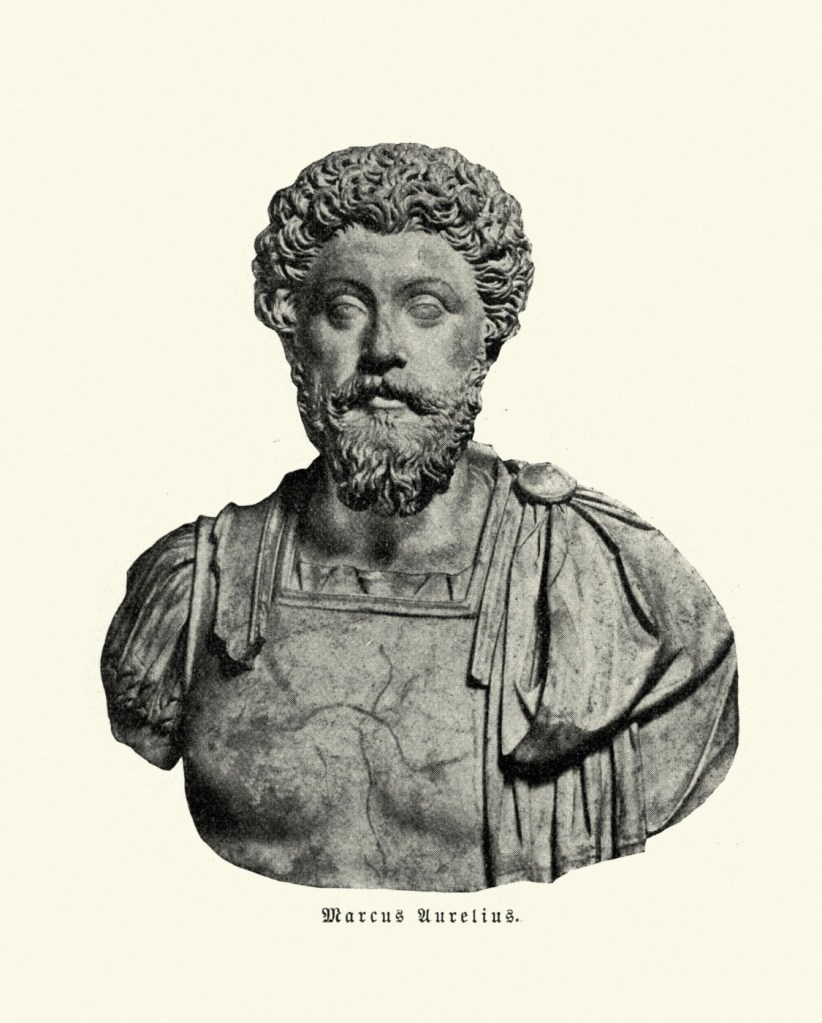
Marcus Aurelius: Stoic Wisdom for a Noisy Modern World

Explore Marcus Aurelius’ Stoic philosophy and how his quiet wisdom helps modern readers build resilience, clarity, and inner peace.

If you’ve ever felt overwhelmed by noise—notifications, opinions, constant urgency—you’re not alone. Two thousand years ago, a Roman emperor faced war, plague, betrayal, and political pressure on a scale most of us can’t imagine. And yet, he wrote reminders to himself about patience, humility, and inner calm.

That man was Marcus Aurelius.

What makes Marcus Aurelius extraordinary isn’t just that he ruled an empire. It’s that he used philosophy not to escape responsibility, but to meet it with steadiness. His private journal, later published as Meditations, has become one of the most enduring guides to mindful living—precisely because it was never meant to impress anyone.

This article explores who Marcus Aurelius was, what he believed, and why his Stoic wisdom still matters in the modern world.

Who Was Marcus Aurelius?

Marcus Aurelius Antoninus (121–180 CE) was the last of Rome’s “Five Good Emperors.” He ruled during a turbulent period marked by military conflict, economic strain, and the Antonine Plague.

Despite his power, Marcus never saw himself as exceptional.

He was:

A reluctant ruler rather than a glory-seeker A student of philosophy before a politician A deeply reflective person living in an unreflective world

Unlike many philosophers, Marcus did not write abstract treatises. Meditations is a collection of personal notes—self-reminders written during military campaigns, often at night, in tents near the front lines.

That intimacy is what gives the text its power.

Stoicism in Plain Language

Stoicism is often misunderstood as emotional suppression. In reality, it’s about emotional clarity.

At its core, Stoicism teaches:

Focus on what you can control Accept what you cannot Act with virtue regardless of circumstance

Marcus returned to these ideas repeatedly—not because he mastered them, but because he struggled with them like anyone else.
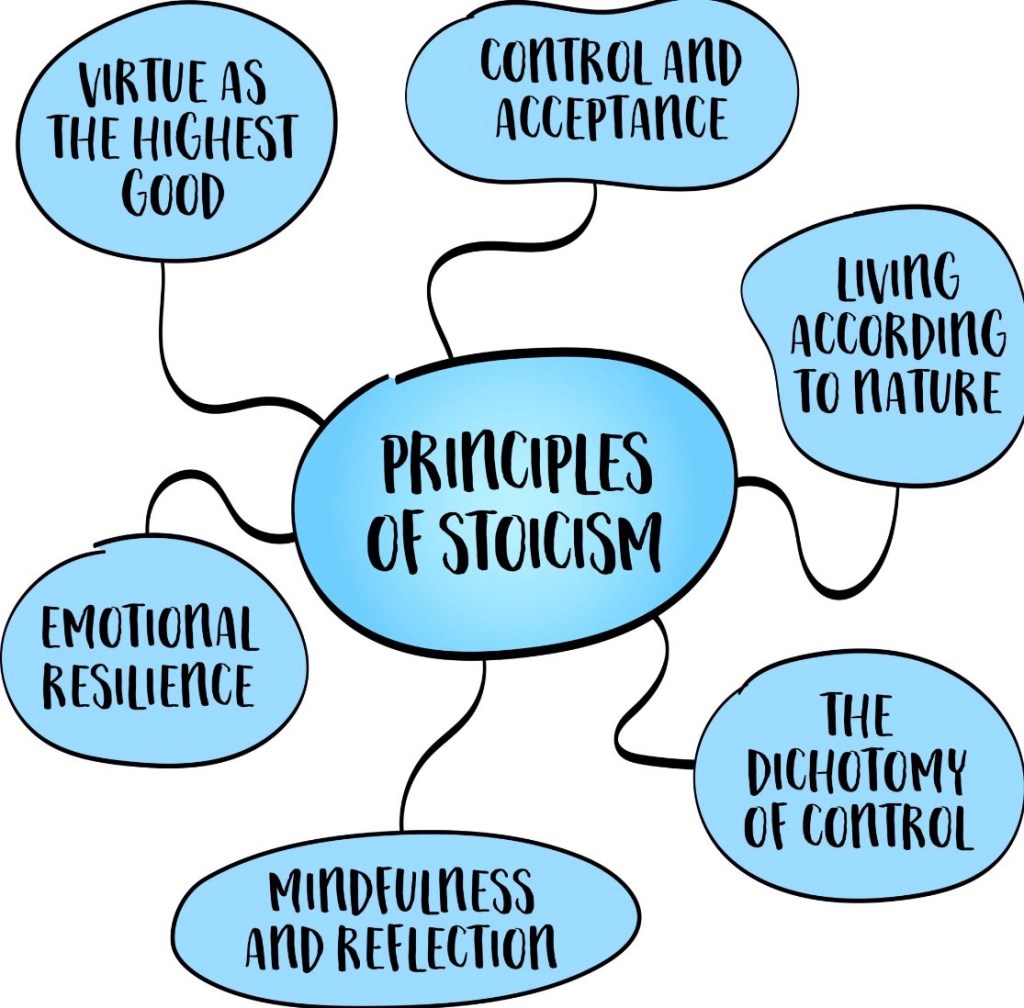
The Dichotomy of Control

One of Marcus’ most practical insights is simple:

Some things are up to us. Some things are not.

He reminds himself that:

Other people’s opinions are not under his control The past and future are not under his control His judgments, intentions, and actions are

This distinction becomes a powerful antidote to anxiety. Much of our stress comes from trying to manage outcomes instead of responses.

Power Without Ego

What’s remarkable about Marcus Aurelius is how often he warns himself against arrogance.

He writes reminders like:

You are temporary You are no more important than others Praise and blame vanish quickly

This is not false humility—it’s realism.

Marcus understood that power amplifies character. Without inner discipline, authority leads to cruelty or excess. With discipline, it becomes service.

In a modern context—leadership roles, teaching, parenting, community work—this mindset remains deeply relevant.

Nature as a Moral Teacher

Marcus frequently uses nature as a grounding reference.

He observes:

Everything follows natural processes Decay and death are not failures but transitions Resistance to reality causes suffering

Rather than romanticizing nature, he treats it as a teacher of impermanence and cooperation.

This perspective aligns closely with modern ideas in mindfulness and ecological psychology: when we see ourselves as part of a larger system, our anxieties shrink to scale.

Why Meditations Still Resonates Today

Marcus Aurelius never intended Meditations to be published. That’s why it feels honest.

He writes about:

Anger he’s trying to restrain Fatigue from dealing with difficult people The temptation to avoid responsibility

These struggles feel strikingly modern.

In an age of personal branding and public performance, Marcus offers something rare: philosophy without an audience.

Practical Takeaways for Modern Life

Marcus Aurelius doesn’t offer hacks. He offers habits of thought.

Here are a few ways his wisdom translates today:

1. Start the Day with Mental Framing

Marcus reminded himself each morning that he would encounter difficult people—and that this was normal.

Try this: Before checking your phone, name three likely challenges of the day and how you intend to meet them calmly.

2. Shorten the Feedback Loop

He often notes how quickly fame, insult, and praise disappear.

Try this: When you feel reactive, ask: Will this matter in a year? A month? A week?

3. Practice Quiet Virtue

Marcus believed right action didn’t require recognition.

Try this: Do one helpful act each day without telling anyone.

4. Remember Impermanence—Gently

Rather than fearing death, Marcus used mortality to sharpen gratitude.

Try this: Notice one ordinary moment—walking, cooking, listening—and fully inhabit it.

Internal Links (Related Reading)

[Internal link: Stoicism and modern mental health] [Internal link: Mindfulness practices for everyday stress] [Internal link: Nature, impermanence, and meaning]

A Quiet Legacy

Marcus Aurelius never claimed enlightenment. He simply tried—again and again—to live with integrity under pressure.

That’s why his work endures.

In a culture obsessed with speed, outrage, and certainty, Marcus offers something slower and sturdier: attention, restraint, and responsibility.

You don’t need to be an emperor to benefit from that.

Soft Call-to-Action

If this kind of reflective philosophy resonates with you, consider subscribing to the Mindful Explorer newsletter for thoughtful essays on psychology, nature, and meaning—delivered calmly, not constantly.

For an easy yet thought provoking read on Stoic philosophy check out The Daily Stoic.

If you’re looking for something more in depth, pick up a copy of Meditations written by Marcus Aurelius himself.

Quantum Immortality: What the Thought Experiment Really Says About Life

Quantum immortality suggests you never experience your own death. Explore what this idea really means, where it comes from, and why it matters psychologically.

Have you ever wondered—quietly, maybe late at night—what it would be like to never experience your own death? Not to live forever in a fantasy sense, but to never encounter the moment where everything stops?

The idea of quantum immortality claims something strange: that from your own perspective, consciousness always continues. Death happens in some versions of reality—but not the one you experience.

This thought experiment sits at the intersection of physics, philosophy, and psychology. And while it’s often misunderstood (or sensationalized), it raises deeply human questions about fear, meaning, and how we relate to mortality.

This article unpacks what quantum immortality actually is—and why it’s far more about how we live than whether we can escape death.

What Is Quantum Immortality? (In Plain Language)

Quantum immortality is a thought experiment, not a proven scientific theory. It grows out of a particular interpretation of quantum mechanics called the Many-Worlds Interpretation.

The simplified idea goes like this:

Every time a truly random quantum event occurs, reality splits into multiple outcomes. In some versions of reality, you survive. In others, you do not. Conscious experience, the argument goes, can only continue in the branches where you remain alive.

From inside consciousness, death is never experienced—only survival.

This leads to the unsettling claim: you always find yourself alive, no matter how unlikely survival becomes.

Where the Idea Comes From: Schrödinger’s Cat, Revisited

Quantum immortality is closely related to the famous Schrödinger’s Cat thought experiment.

In that scenario:

A cat is placed in a box with a quantum-triggered poison. Until observed, the cat is both alive and dead. Observation collapses the outcome.

Quantum immortality replaces the cat with you.

Instead of the universe choosing one outcome, all outcomes exist simultaneously. From the inside, consciousness only “tracks” the timelines where it continues.

Important distinction:

This does not mean you are physically immortal.

It means that subjective experience might never include the moment of non-experience.

Why Scientists Don’t Take It Literally

Physicists generally view quantum immortality with skepticism—and for good reasons.

Key problems with the idea

Unfalsifiable: There’s no way to test whether consciousness “jumps” timelines. Biology still fails: Survival doesn’t guarantee health, coherence, or quality of life. Anthropic bias: We only observe realities compatible with observation—this doesn’t imply immortality.

Most physicists see quantum immortality as an interesting philosophical edge case, not a description of reality.

The Psychological Pull: Why This Idea Grabs Us

Quantum immortality is compelling not because it’s true—but because it speaks directly to human fear.

What it emotionally offers

A sense of continuity Relief from death anxiety A feeling of cosmic significance

Psychologically, it mirrors older ideas:

Eternal soul Reincarnation Afterlife persistence

But instead of religion, it uses the language of physics—making it feel modern, rational, and safe.

The Hidden Danger: How the Idea Can Be Misused

Some online discussions dangerously misinterpret quantum immortality as a reason to take reckless risks.

This is a misunderstanding.

Even within the thought experiment:

Countless versions of you suffer, deteriorate, or die Survival does not imply well-being Consciousness could persist in increasingly fragile states

From a mental health perspective, the idea should never be used to justify harm or risk-taking.

A More Useful Interpretation: Mortality Shapes Meaning

Seen more carefully, quantum immortality points to something quieter and more grounded:

We never experience non-existence—only existence.

This is already true, without quantum mechanics.

Every moment you experience is a moment before death. The unknown isn’t what death feels like—it’s what living well feels like right now.

Instead of asking:

“Will I survive in some universe?”

A more helpful question is:

“How present am I in this one?”

What Quantum Immortality Teaches Us (Without Taking It Literally)

Here’s the grounded takeaway—no metaphysics required:

You only ever experience being alive Meaning is constructed moment by moment Fear of death often distracts from attention to life

Psychologically, this aligns with research showing that:

Acceptance of mortality increases life satisfaction Mindfulness reduces death anxiety Meaning grows from engagement, not permanence

Practical Takeaways for Everyday Life

You don’t need to believe in quantum immortality to learn from it.

Try this instead

Notice moments where you’re fully present Treat attention as finite and valuable Choose actions that improve this timeline

Ask yourself:

What am I postponing because I assume “later”? Where am I numbing instead of engaging? What version of myself am I actively reinforcing?

A Gentle Closing Thought

Quantum immortality doesn’t promise eternal life. What it quietly suggests is something more human:

You are always alive until you aren’t.

And that makes this moment—not some hypothetical universe—the one that matters.

Lucid Dreaming: Unlocking Awareness in Your Sleep

Lucid dreaming lets you become aware within your dreams, offering creative, emotional, and therapeutic benefits. Learn how to start lucid dreaming safely.

Pick up a Dream Journal on Amazon

What Is Lucid Dreaming?

Lucid dreaming happens when you become aware that you’re dreaming while still inside the dream. This awareness gives you the unique ability to influence your dream’s environment, characters, and story — like directing your own personal movie in real time.

Some people experience brief moments of lucidity, while others can train themselves to gain full control, flying through the sky, solving problems, or exploring creative ideas while asleep.

The Science Behind It

Researchers link lucid dreaming to heightened activity in the prefrontal cortex, the part of your brain responsible for decision-making and self-awareness. During REM (rapid eye movement) sleep — the phase when most vivid dreams occur — the brain normally relaxes this region. But in lucid dreamers, it appears partially active, allowing for conscious thought inside the dream state.

Benefits of Lucid Dreaming

Creativity boost: Artists, writers, and musicians use lucid dreaming to generate ideas. Nightmare control: You can face fears directly, changing scary dreams into positive outcomes. Emotional healing: Revisiting memories or visualizing positive change can reduce anxiety. Skill practice: Athletes and performers report improved performance after practicing moves in lucid dreams. Exploration and curiosity: Many people simply enjoy the boundless freedom of dream worlds.

How to Induce Lucid Dreams

Reality checks: Ask yourself throughout the day, “Am I dreaming?” Look for clues — clocks that shift, text that changes, or strange logic. Dream journal: Write your dreams immediately after waking. This improves dream recall and awareness. Mnemonic Induction (MILD): Before sleep, repeat a phrase like, “Next time I’m dreaming, I’ll know I’m dreaming.” Wake Back to Bed (WBTB): Wake up after 5–6 hours of sleep, stay awake for 20 minutes, then go back to bed while focusing on dreaming consciously. Meditation and mindfulness: A clear, focused mind during the day makes lucidity more likely at night.

Risks and Considerations

Lucid dreaming is generally safe, but frequent practice can sometimes cause:

Sleep disruption from waking up too often Vivid or unsettling dream experiences Confusion between dream and waking memories (rare)

It’s important to maintain a healthy sleep schedule and practice grounding techniques if you ever feel disoriented upon waking.

Lucid Dreaming and the Future of Sleep Research

Modern neuroscience is exploring lucid dreaming for mental health therapy, especially for PTSD and recurrent nightmares. With advances in brain imaging and sleep tracking, scientists are finding new ways to interact with dreamers in real time — bridging the gap between consciousness and the dream world.

Final Thoughts

Lucid dreaming offers a fascinating bridge between imagination and awareness. Whether you want to conquer fears, boost creativity, or simply explore your subconscious, developing lucidity can open extraordinary dimensions of the mind — all from the comfort of your own bed.

What would you do if you realized you were dreaming tonight?

Pick up a Dream Journal on Amazon and track your dreams!

🌀 The Tao Te Ching: History and Analysis of an Ancient Masterpiece

Explore the Tao Te Ching by Laozi — an ancient guide to harmony, balance, and effortless living through Taoist philosophy.

Published on Substratum

Known as the wisest book ever written. It is said that you could read it in an afternoon, but you could study it for a lifetime.

🌿 Introduction

Few works of philosophy have influenced as many people for as long as the Tao Te Ching. Written over 2,500 years ago, this brief yet profound text continues to shape Eastern and Western thought alike. Its poetic reflections on balance, humility, and harmony have inspired leaders, artists, spiritual seekers, and scholars across centuries.

In this article, we’ll explore the history, authorship, and key ideas of the Tao Te Ching — and why its wisdom remains timeless.

📜 Origins and Authorship

The Tao Te Ching (道德經) — translated roughly as “The Classic of the Way and Virtue” — is traditionally attributed to Laozi (Lao Tzu), a semi-mythical philosopher thought to have lived in the 6th century BCE.

According to legend, Laozi served as a record keeper in the Zhou Dynasty court. Disillusioned by corruption and social decline, he decided to leave China, but before departing, a border guard named Yinxi recognized him and asked for his wisdom. Laozi then composed the Tao Te Ching — about 5,000 Chinese characters — and disappeared into the west.

While this story is likely apocryphal, the text itself emerged from early Daoist (Taoist) traditions that sought to align human life with the natural order of the universe. Scholars now believe the Tao Te Ching was compiled gradually between the 4th and 3rd centuries BCE, reflecting layers of oral wisdom and poetic thought.

📚 The Meaning of “Tao” and “Te”

Tao (道) means the Way — not just a path, but the fundamental order and flow of the universe. It is the source of all things, yet it cannot be defined or named. Te (德) means virtue or power — the manifestation of the Tao in the world through one’s actions, character, and alignment with nature.

Together, “Tao Te Ching” can be translated as “The Book of the Way and Its Virtue.”

🧘‍♂️ Key Themes and Philosophical Ideas

1. Wu Wei (無為): Effortless Action

One of the central ideas of the Tao Te Ching is wu wei, or “non-action.” This doesn’t mean doing nothing, but rather acting in harmony with the natural flow of things. True wisdom and effectiveness arise when one stops forcing outcomes and allows life to unfold naturally.

“The Tao never does anything, yet through it all things are done.” — Chapter 37

2. Simplicity and Humility

The text emphasizes simplicity, humility, and modesty as paths to peace and strength. The sage leads not through dominance, but by serving others and staying connected to the natural rhythm of life.

“The highest good is like water. Water benefits all things and does not compete.” — Chapter 8

3. Relativity and Paradox

The Tao Te Ching often uses paradox to challenge rigid thinking. Good and bad, strong and weak, high and low — these opposites define each other and cannot exist independently.

“When people see some things as beautiful, other things become ugly. When people see some things as good, other things become bad.” — Chapter 2

4. Return to the Source

A recurring theme is the return to one’s original nature — simplicity, stillness, and unity with the Tao. In this return, one finds peace beyond the turmoil of desire and ambition.

🪶 Structure and Style

The Tao Te Ching contains 81 short chapters, written in rhythmic, poetic form. The text blends mysticism, political philosophy, and personal ethics. Because classical Chinese is highly compact and ambiguous, translations vary widely — each revealing new shades of meaning.

Notable translators include Stephen Mitchell, D.C. Lau, Gia-Fu Feng & Jane English, and Jonathan Star, among others. Some emphasize poetic flow, while others focus on linguistic accuracy or philosophical clarity.

🌏 Influence Across Cultures

The Tao Te Ching has profoundly shaped Daoism, Confucianism, Chinese Buddhism, and even modern psychology and leadership theory.

Its ideas influenced Zen Buddhism in Japan, transcendentalism in the West, and even contemporary mindfulness movements. Thinkers like Alan Watts, Carl Jung, and Thomas Merton all drew on its insights into balance, paradox, and the nature of being.

💡 Modern Relevance

In an age of overwork, information overload, and environmental crisis, the Tao Te Ching offers a refreshing antidote. Its wisdom reminds us that strength lies in gentleness, and clarity in stillness.

Learning to flow with life rather than fight against it can lead to greater peace, creativity, and harmony — both within ourselves and with the world around us.

✨ Conclusion

The Tao Te Ching is more than a book — it’s a mirror for the mind. Each time you read it, its meaning changes, reflecting your state of being.

Its message is subtle yet universal: when we let go of control and return to simplicity, we rediscover the profound order of the Tao — the Way that flows through all things.

📖 Recommended Reading

Tao Te Ching — translated by Stephen Mitchell

The Tao of Pooh — by Benjamin Hoff

The Wisdom of Insecurity — by Alan Watts

Living the Wisdom of the Tao — Dr. Wayne Dyer