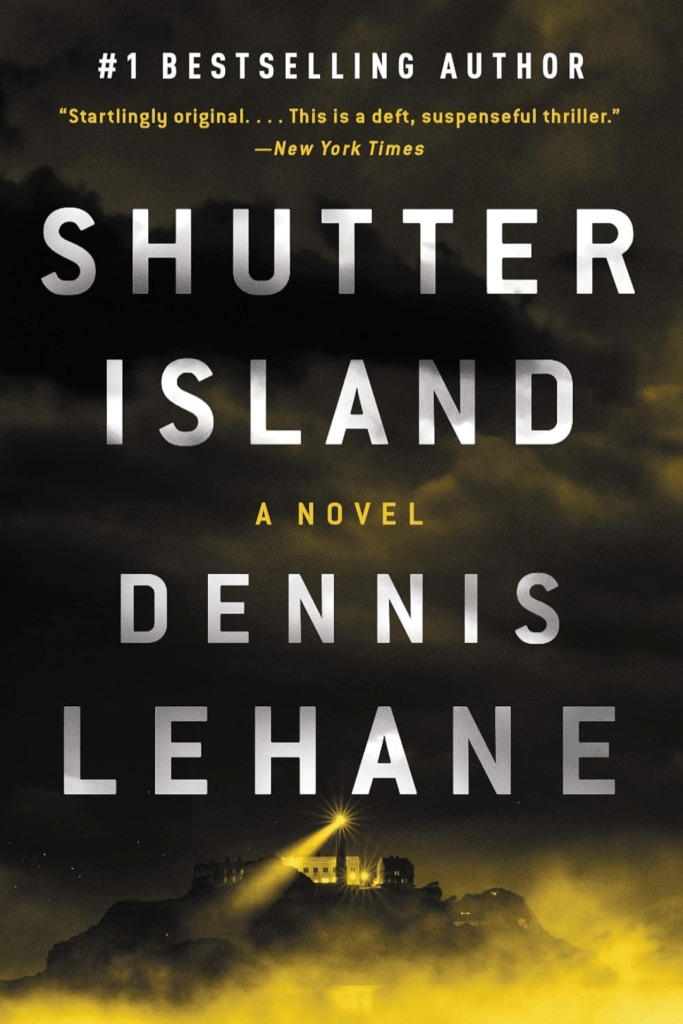
Why Shutter Island Still Captivates Readers
Some books entertain you while you’re reading them. Others continue to occupy your thoughts long after you’ve closed the final page. Shutter Island by Dennis Lehane belongs firmly in the second category.
At first glance, it appears to be a classic detective mystery. A U.S. Marshal travels to a remote psychiatric hospital to investigate the disappearance of a dangerous patient. Yet as the story unfolds, what begins as a straightforward investigation transforms into an unforgettable psychological journey that challenges our understanding of memory, trauma, and reality itself.
Whether you’re a fan of mystery novels or fascinated by the psychology of the human mind, Shutter Island offers far more than a suspenseful plot. It invites readers to question how much we can truly trust our own perceptions.
A Story Built on Suspense
Set in 1954, the novel follows U.S. Marshal Teddy Daniels and his partner Chuck Aule as they arrive at Ashecliffe Hospital, an institution for the criminally insane located on an isolated island.
The setting immediately establishes an atmosphere of unease. Dense fog, violent storms, towering cliffs, and locked wards create a feeling that escape—both physical and psychological—is impossible.
Unlike many modern thrillers that rely on constant action, Lehane patiently builds suspense. Every conversation, every clue, and every unanswered question increases the tension while encouraging readers to form—and repeatedly revise—their theories.
More Than a Mystery
One of the novel’s greatest strengths is that it refuses to remain just a detective story.
Beneath the mystery lies an exploration of several profound psychological themes:
Trauma and Memory
The novel illustrates how traumatic experiences can shape the way we interpret reality. Memories are not always objective recordings of events; they are influenced by emotion, grief, and our need to protect ourselves from unbearable pain.
Identity
Who are we when our memories become uncertain?
This question lies at the heart of Shutter Island. The novel explores how identity is built through the stories we tell ourselves and what happens when those stories begin to unravel.
Perception vs. Reality
Readers quickly discover that appearances can be deceptive.
Lehane masterfully demonstrates how assumptions influence our understanding of events, encouraging us to question not only the narrator but also our own conclusions as readers.
A Jungian Perspective
For readers interested in psychology, Shutter Island can also be viewed through the lens of Carl Jung’s concept of the Shadow.
Jung believed that every person carries aspects of themselves they struggle to acknowledge. Rather than integrating these painful emotions, people often repress them.
Throughout the novel, hidden fears, guilt, and unresolved trauma emerge in increasingly unsettling ways. Without revealing spoilers, many of the book’s most memorable moments can be interpreted as symbolic confrontations with the parts of ourselves we would rather avoid.
This psychological depth is one reason the novel remains so rewarding upon a second reading.
Dennis Lehane’s Writing Style
Lehane writes with remarkable clarity while maintaining an atmosphere of uncertainty.
His prose is neither overly elaborate nor simplistic. Instead, it quietly builds tension through carefully chosen details and believable dialogue.
The pacing deserves particular praise. Although the opening chapters progress deliberately, each revelation feels earned, making the final act exceptionally satisfying.
Readers who enjoy slowly unfolding mysteries will likely appreciate this approach.
What Makes Shutter Island Exceptional?
Several qualities distinguish the novel from other psychological thrillers:
- An unforgettable atmosphere that feels almost cinematic.
- Complex characters with believable motivations.
- Psychological depth beyond a typical mystery.
- Excellent pacing that rewards patient readers.
- One of the most memorable endings in modern fiction.
Perhaps most impressive is Lehane’s careful foreshadowing. Many seemingly insignificant moments become remarkably meaningful after finishing the novel, making it ideal for rereading.
Are There Any Weaknesses?
Very few.
Readers expecting nonstop action may find the opening chapters slower than contemporary thrillers.
However, this deliberate pace allows the psychological tension to build naturally, making the eventual payoff far more effective.
Should You Read the Book Before Watching the Film?
If possible, yes.
The film adaptation captures much of the novel’s atmosphere remarkably well, but the book provides greater insight into Teddy’s thoughts and emotional struggles.
Reading the novel first allows the psychological themes to unfold more gradually and makes the experience even more rewarding.
Final Verdict
Shutter Island is far more than an entertaining mystery. It is an intelligent exploration of grief, trauma, identity, and the fragile relationship between memory and reality.
Its haunting atmosphere, layered storytelling, and psychological depth make it one of the finest thrillers of the modern era. Even readers who believe they have solved the mystery may discover, upon reflection, that the novel still has more to reveal.
It is rare to find a book that becomes even better after the final chapter. Shutter Island accomplishes exactly that.
Mindful Explorer Rating: ★★★★★ (5/5)
If you enjoy stories that challenge your assumptions while exploring the complexities of the human mind, this novel deserves a place at the top of your reading list.
Practical Takeaways
Although Shutter Island is fiction, it offers meaningful insights:
- Our perception of reality is shaped by experience.
- Unresolved trauma can profoundly influence our thinking.
- Identity is closely connected to memory and personal narrative.
- Facing painful truths is often more difficult—but ultimately healthier—than avoiding them.
Related Mindful Explorer Articles
- [Internal Link: The Psychology of Unreliable Narrators]
- [Internal Link: Carl Jung’s Shadow Explained]
- [Internal Link: Why We Love Psychological Thrillers]
Continue the Journey
If you enjoyed this review, subscribe to the Mindful Explorer newsletter for thoughtful book reviews, psychology articles, and explorations into the science of meaning, creativity, and mindful living.

