Discover the yellow boxfish, a cube-shaped reef fish whose slow movement, toxins, and design reveal surprising lessons about evolution and resilience.
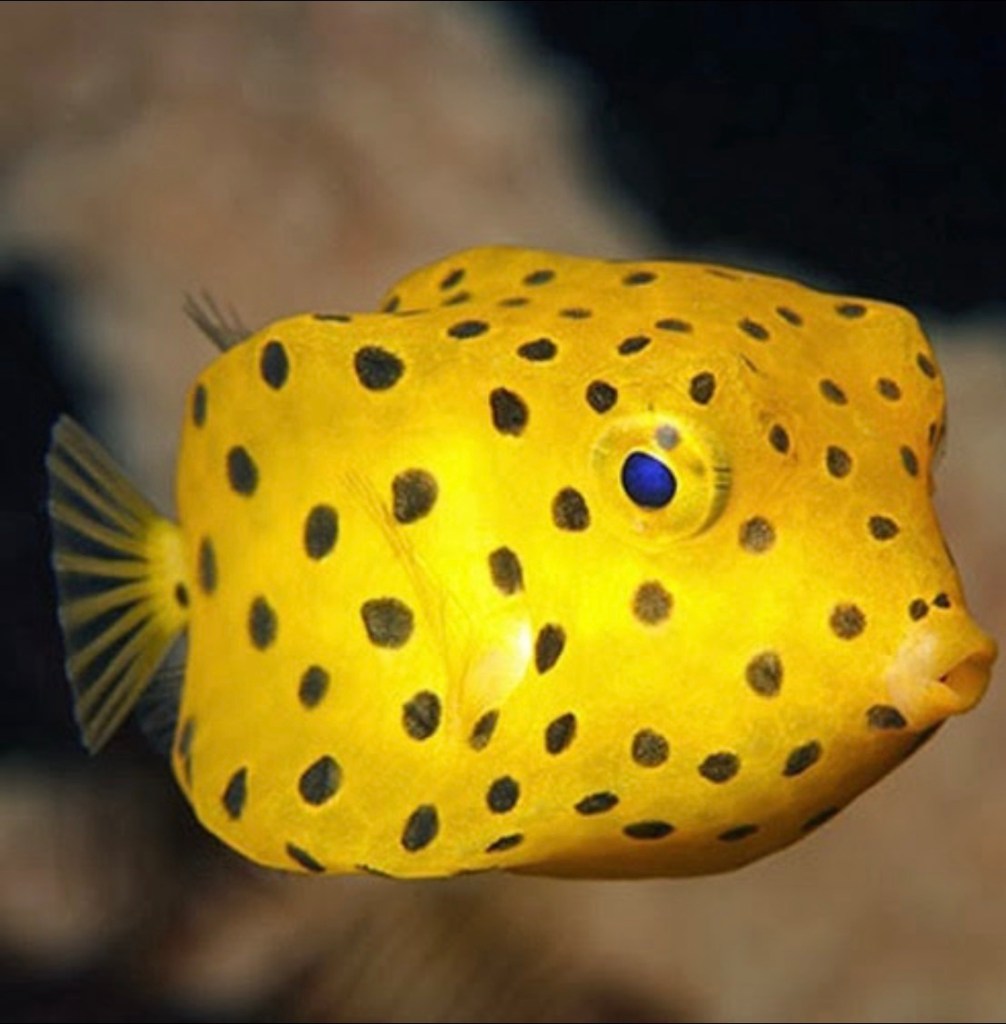
If you’ve ever watched a reef documentary and paused when a bright yellow, cube-shaped fish drifted calmly across the screen, you’re not alone. The yellow boxfish looks like something a child might design with building blocks—simple, cheerful, and oddly out of place in the fast, flowing chaos of the ocean.
But this fish isn’t clumsy or accidental. The yellow boxfish is a quiet evolutionary success story. Its unusual shape, gentle swimming style, and built-in chemical defenses tell us something deeper about how nature solves problems—not always through speed or aggression, but through patience, structure, and balance.
This article explores why the yellow boxfish matters—and what it can teach us about adaptation, protection, and being different in a world that rewards sameness.
4. What Is the Yellow Boxfish?
The yellow boxfish (Ostracion cubicus) is a tropical reef fish found throughout the Indo-Pacific, including coral reefs near Southeast Asia, Australia, and parts of the Indian Ocean.
Key characteristics:
Bright yellow body (especially vivid in juveniles) Distinct cube-like shape Small fins used for slow, precise movement Dark spots scattered across the body Calm, deliberate swimming behavior
Unlike streamlined fish designed for speed, the yellow boxfish looks rigid and boxy—yet it thrives.
5. Why Is the Yellow Boxfish Cube-Shaped?
At first glance, the boxfish’s shape seems like a design flaw. But biologically, it’s a brilliant solution.
The bony exoskeleton
Instead of flexible scales, the yellow boxfish has a hard, interlocking bony armor called a carapace. This structure:
Protects against predators Prevents crushing bites Maintains a stable internal shape
This rigid armor limits flexibility—but dramatically increases survival.
🧠 Psychology of nature insight:
Not all resilience comes from flexibility. Sometimes strength comes from boundaries.
6. How Does the Yellow Boxfish Move?
Despite its stiff body, the yellow boxfish is surprisingly agile.
Rather than using its tail for propulsion like most fish, it relies on:
Pectoral fins (sides) Dorsal fin (top) Anal fin (bottom)
This style of motion—called ostraciiform swimming—allows precise hovering and maneuvering around coral.
Why slow works
Coral reefs are complex, not open highways Precision matters more than speed. Slow movement conserves energy
The yellow boxfish doesn’t chase—it navigates.
7. A Hidden Defense: Toxic Protection
One of the yellow boxfish’s most remarkable traits is invisible.
When threatened or stressed, it can release a toxin called ostracitoxin into the surrounding water. This toxin:
Can paralyze or kill nearby fish Makes predators think twice Is effective even without a chase
Importantly, the toxin is a last resort, not a constant weapon.
🌿 Nature principle:
True power doesn’t need constant display. It works quietly, only when necessary.
8. Juvenile vs Adult Yellow Boxfish
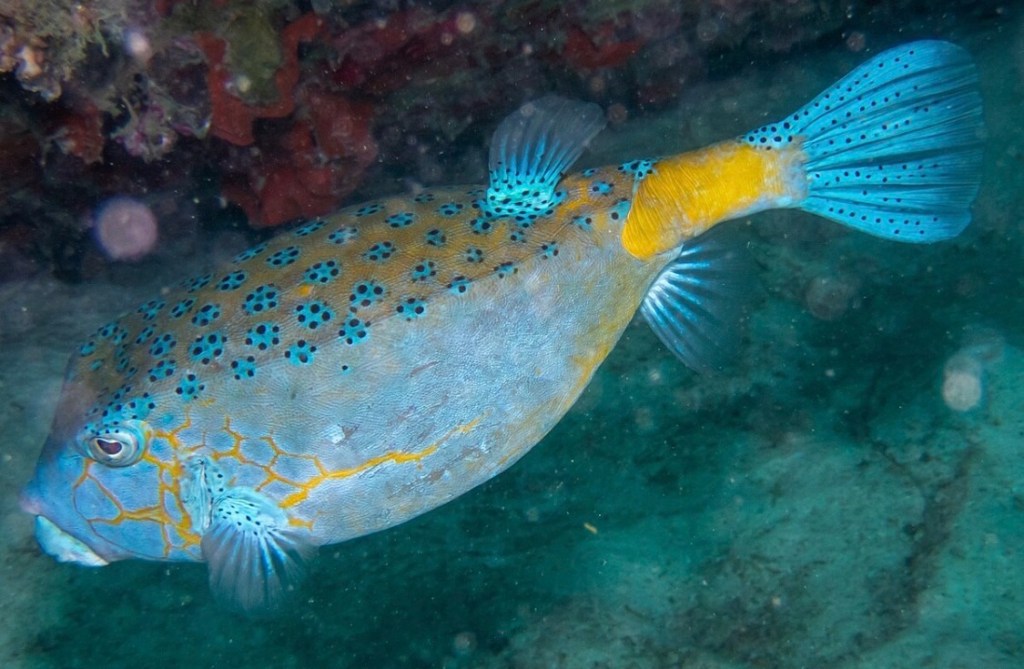
Juvenile yellow boxfish are iconic—bright yellow with bold black spots. Adults, however, often change:
Colors may dull or shift Patterns become less pronounced Body shape remains box-like
This change reflects a broader pattern in nature: early life stages often rely on visual warning signals, while adults depend more on size, toxins, or experience.
9. What the Yellow Boxfish Teaches Us About Adaptation
From a mindful perspective, the yellow boxfish offers several quiet lessons:
1. There is more than one way to survive
Speed, aggression, and dominance aren’t the only successful strategies.
2. Protection can look gentle
The fish appears calm and harmless—but carries strong defenses.
3. Constraints can create elegance
Its rigid body forces creative movement, not limitation.
In psychology, we often talk about adaptive strategies—ways individuals learn to work with their traits instead of against them. The yellow boxfish embodies this idea perfectly.
10. Conservation and Reef Health
Like many reef species, the yellow boxfish depends on healthy coral ecosystems. Threats include:
Coral bleaching Pollution Climate-driven temperature changes Reef habitat destruction
Protecting reefs doesn’t just preserve biodiversity—it protects entire networks of slow, subtle creatures whose value isn’t immediately obvious.
🪸 When reefs collapse, the quiet specialists disappear first.
11. Practical Takeaways (Mindful Living Meets Nature)
Here’s how the yellow boxfish’s story can translate into daily life:
Work with your structure, not against it Some people thrive on flexibility; others on routine and boundaries. You don’t need to rush to be effective Precision and consistency often outperform speed. Gentleness and strength can coexist Calm presence doesn’t mean lack of power.
These lessons align closely with research on sustainable performance, burnout prevention, and psychological well-being.
If you enjoy thoughtful explorations of nature, psychology, and mindful living, consider subscribing to the Mindful Explorer newsletter for calm, curiosity-driven insights each week.
 Mindful Explorer