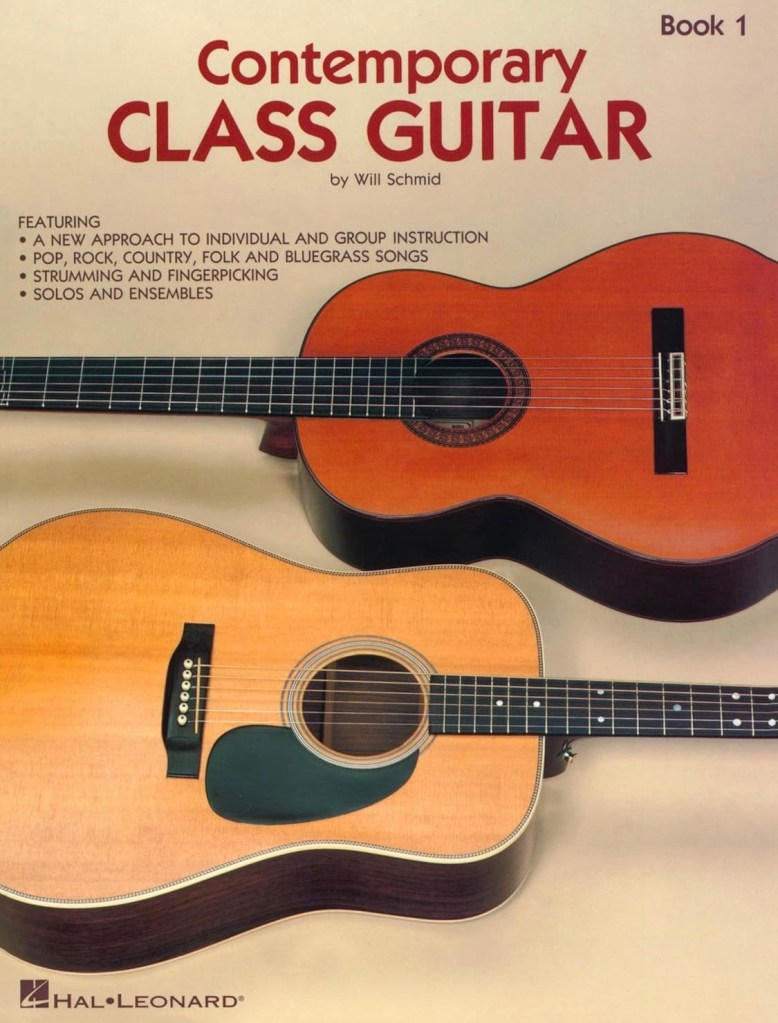
Teaching guitar in a classroom setting comes with unique challenges: mixed skill levels, limited time, varying student motivation, and often large class sizes. One method book frequently recommended for these situations is Contemporary Class Guitar by Will Schmid. But is it actually effective for teachers and students in a group setting?
This article breaks down the strengths, limitations, and best use cases of Contemporary Class Guitar to help music educators decide if it belongs in their classroom.
Overview of Contemporary Class Guitar
Contemporary Class Guitar was written specifically for classroom guitar instruction, not private lessons. Unlike many solo guitar methods, it is designed to function smoothly with:
Large groups Mixed-ability students Short class periods School-based music programs
This focus alone makes it stand out in the crowded field of guitar method books.
Why Teachers Like This Book
1. Built for Group Instruction
The book’s pacing and layout are classroom-friendly. Concepts are introduced gradually, allowing teachers to move an entire class forward together without leaving beginners behind.
Key advantages include:
Clear lesson sequencing Predictable skill progression Ensemble-style exercises that keep everyone playing
This makes it especially useful for public school music programs.
2. Balanced Musical Skill Development
Rather than focusing on just chords or just melodies, the book blends:
Standard music notation Open-position chords Strumming patterns Basic fingerpicking Simple ensemble arrangements
This balance helps students develop real musicianship, not just chord memorization.
3. Accessible for Non-Guitarist Teachers
One of the book’s biggest strengths is how approachable it is for educators who are not guitar specialists.
Teachers benefit from:
Straightforward explanations Logical sequencing of concepts Minimal prep time once familiar with the method
This makes it a strong choice for band, choir, or general music teachers expanding into guitar instruction.
Student Experience: Is It Engaging?
Students typically respond well because:
Early success comes quickly Parts are musically achievable Group playing reduces pressure
However, motivation often increases when teachers supplement the book with:
Student-chosen songs Pop chord charts Small ensemble challenges
On its own, the repertoire is educational but not always exciting.
Limitations to Consider
1. Not Style-Specific
If your program focuses heavily on:
Classical guitar technique Rock lead guitar Advanced fingerstyle pop
You’ll need additional materials.
2. Limited Contemporary Repertoire
Despite the title, the music leans toward:
Folk-style pieces Traditional classroom material Instructional compositions
Pedagogically solid—but not always aligned with modern student listening habits.
Best Teaching Environments for This Book
Contemporary Class Guitar works best in:
🎸 Middle school guitar classes 🎵 High school guitar electives 🏫 Community and after-school programs 🧑🏫 Large beginner group classes
It is especially effective when structure and consistency are priorities.
How Teachers Can Enhance the Curriculum
To maximize engagement, many educators pair this book with:
Weekly “choice song” days Pop/rock chord sheets Simple fingerstyle arrangements Small-group rotations (melody, chords, rhythm)
This hybrid approach keeps students motivated while maintaining strong fundamentals.
Final Verdict
Overall Rating: 8.5/10 for group guitar instruction
Contemporary Class Guitar by Will Schmid is a reliable, classroom-tested method that delivers exactly what most group guitar teachers need: structure, clarity, and steady progress. While it benefits from supplemental material, its foundation is strong and practical.
If you’re building or refining a school-based guitar program, this book remains one of the safest and most effective choices available.
Have you used Contemporary Class Guitar in your classroom—or are you considering it for a new program? Share your experience or questions and let’s compare notes to build better guitar classes together 🎸

 Mindful Explorer