🌀 The Tao Te Ching: History and Analysis of an Ancient Masterpiece

Explore the Tao Te Ching by Laozi — an ancient guide to harmony, balance, and effortless living through Taoist philosophy.

Published on Substratum

Known as the wisest book ever written. It is said that you could read it in an afternoon, but you could study it for a lifetime.

🌿 Introduction

Few works of philosophy have influenced as many people for as long as the Tao Te Ching. Written over 2,500 years ago, this brief yet profound text continues to shape Eastern and Western thought alike. Its poetic reflections on balance, humility, and harmony have inspired leaders, artists, spiritual seekers, and scholars across centuries.

In this article, we’ll explore the history, authorship, and key ideas of the Tao Te Ching — and why its wisdom remains timeless.

📜 Origins and Authorship

The Tao Te Ching (é“ćŸ·ç¶“) — translated roughly as “The Classic of the Way and Virtue” — is traditionally attributed to Laozi (Lao Tzu), a semi-mythical philosopher thought to have lived in the 6th century BCE.

According to legend, Laozi served as a record keeper in the Zhou Dynasty court. Disillusioned by corruption and social decline, he decided to leave China, but before departing, a border guard named Yinxi recognized him and asked for his wisdom. Laozi then composed the Tao Te Ching — about 5,000 Chinese characters — and disappeared into the west.

While this story is likely apocryphal, the text itself emerged from early Daoist (Taoist) traditions that sought to align human life with the natural order of the universe. Scholars now believe the Tao Te Ching was compiled gradually between the 4th and 3rd centuries BCE, reflecting layers of oral wisdom and poetic thought.

📚 The Meaning of “Tao” and “Te”

Tao (道) means the Way — not just a path, but the fundamental order and flow of the universe. It is the source of all things, yet it cannot be defined or named. Te (ćŸ·) means virtue or power — the manifestation of the Tao in the world through one’s actions, character, and alignment with nature.

Together, “Tao Te Ching” can be translated as “The Book of the Way and Its Virtue.”

đŸ§˜â€â™‚ïž Key Themes and Philosophical Ideas

1. Wu Wei (無ç‚ș): Effortless Action

One of the central ideas of the Tao Te Ching is wu wei, or “non-action.” This doesn’t mean doing nothing, but rather acting in harmony with the natural flow of things. True wisdom and effectiveness arise when one stops forcing outcomes and allows life to unfold naturally.

“The Tao never does anything, yet through it all things are done.” — Chapter 37

2. Simplicity and Humility

The text emphasizes simplicity, humility, and modesty as paths to peace and strength. The sage leads not through dominance, but by serving others and staying connected to the natural rhythm of life.

“The highest good is like water. Water benefits all things and does not compete.” — Chapter 8

3. Relativity and Paradox

The Tao Te Ching often uses paradox to challenge rigid thinking. Good and bad, strong and weak, high and low — these opposites define each other and cannot exist independently.

“When people see some things as beautiful, other things become ugly. When people see some things as good, other things become bad.” — Chapter 2

4. Return to the Source

A recurring theme is the return to one’s original nature — simplicity, stillness, and unity with the Tao. In this return, one finds peace beyond the turmoil of desire and ambition.

đŸȘ¶ Structure and Style

The Tao Te Ching contains 81 short chapters, written in rhythmic, poetic form. The text blends mysticism, political philosophy, and personal ethics. Because classical Chinese is highly compact and ambiguous, translations vary widely — each revealing new shades of meaning.

Notable translators include Stephen Mitchell, D.C. Lau, Gia-Fu Feng & Jane English, and Jonathan Star, among others. Some emphasize poetic flow, while others focus on linguistic accuracy or philosophical clarity.

🌏 Influence Across Cultures

The Tao Te Ching has profoundly shaped Daoism, Confucianism, Chinese Buddhism, and even modern psychology and leadership theory.

Its ideas influenced Zen Buddhism in Japan, transcendentalism in the West, and even contemporary mindfulness movements. Thinkers like Alan Watts, Carl Jung, and Thomas Merton all drew on its insights into balance, paradox, and the nature of being.

💡 Modern Relevance

In an age of overwork, information overload, and environmental crisis, the Tao Te Ching offers a refreshing antidote. Its wisdom reminds us that strength lies in gentleness, and clarity in stillness.

Learning to flow with life rather than fight against it can lead to greater peace, creativity, and harmony — both within ourselves and with the world around us.

✹ Conclusion

The Tao Te Ching is more than a book — it’s a mirror for the mind. Each time you read it, its meaning changes, reflecting your state of being.

Its message is subtle yet universal: when we let go of control and return to simplicity, we rediscover the profound order of the Tao — the Way that flows through all things.

📖 Recommended Reading

Tao Te Ching — translated by Stephen Mitchell

The Tao of Pooh — by Benjamin Hoff

The Wisdom of Insecurity — by Alan Watts

Living the Wisdom of the Tao — Dr. Wayne Dyer

Should the World shift to a 32-hour workweek? — pros, cons, real examples, and the evidence

Short answer: a 32-hour (typically four 8-hour days) workweek can improve employee wellbeing and — in many trials — sustain or even raise productivity, but it’s not a universal fix. Industries, job types, and implementation details matter a lot. Below I lay out the main pros and cons, show concrete examples of countries and companies that have tried shorter weeks, and link to the studies and reports that support each claim so you can judge the evidence yourself.

What people mean by “32-hour week”

Most pilots and proposals refer to working 32 hours while keeping pay the same (i.e., no pay cut), often implemented as four 8-hour days or compressed/reshaped hours across the week. Sometimes “shorter weeks” refers to reduced hours with pro-rata pay cuts; the outcomes differ depending on which model is used. 

Pros (what the evidence shows)

1. Better wellbeing, less burnout

Multiple large pilots report improvements in stress, burnout, mental health and work-life balance for employees who moved to shorter weeks. Iceland’s public-sector trials (2015–2019) showed large gains in wellbeing and broad satisfaction. The UK large pilot (2022) also found lower stress and higher life satisfaction among participants. 

2. Productivity is often maintained or increased

Real-world trials repeatedly show that shorter weeks do not automatically reduce output — and in many cases output rose or stayed the same. Microsoft Japan’s August 2019 trial reported a ~40% increase in productivity (measured by sales per employee/time savings from meetings), attributed to fewer meetings, clearer priorities, and focus time. The UK pilot companies overall reported stable or increased revenue. 

3. Recruitment, retention, and lower absenteeism

Companies that shorten hours commonly report easier hiring, lower turnover, and fewer sick days—important cost offsets for employers. The UK trial and several company case studies noted reduced resignations and improved recruitment metrics. 

4. Environmental and operational benefits

Fewer commuting days and lower office usage can reduce electricity and carbon use (Microsoft Japan reported energy savings during its trial) and—depending on industry—operational costs. 

Cons and caveats (what can go wrong or limit benefits)

1. Not equally feasible across all industries

Customer-facing services, healthcare, retail, and any 24/7 operation can’t simply close a weekday without hiring more staff or changing shift patterns—both of which can increase costs. Some firms in the UK pilot found sectoral limits and difficulty matching client expectations. 

2. Risk of “work intensification”

If employers compress 40 hours of work into 32, employees may face higher intensity and longer workdays or be “on call” during the off day, which can increase stress rather than reduce it. Outcomes depend on whether productivity gains come from real efficiency improvements (fewer meetings, better processes) or simply pushing more work into fewer hours. Mixed evidence exists: some surveys show reductions in burnout but others (a Gallup-cited finding) note higher burnout in some 4-day configurations. Implementation details matter. 

3. Uneven benefits across income levels and job types

White-collar knowledge workers often see big wellbeing/productivity gains; lower-paid shift workers may see smaller effects or need different protections (shift premiums, guaranteed hours). Trials with no pay cut are politically and financially easier to propose for salaried roles than for hourly roles unless employers adjust staffing or pricing. 

4. Transition costs & client/customer expectations

Reorganizing workflows, training managers in output-focused performance, and communicating with customers takes time and money. Some firms decide not to continue after a short pilot because the change management was underestimated, or clients resisted the shift. 

Concrete examples & evidence (who tried it and what happened)

Microsoft Japan (August 2019) — 5-week “Work-Life Choice Challenge”: offices closed on Fridays; Microsoft reported a ~40% rise in productivity (sales per employee) and big drops in meeting time and electricity usage. Employee surveys showed improved work–life balance. Critics note measures were short-term and context-specific.  Iceland public-sector trials (2015–2019) — ~2,500 public-sector workers participated in trials that reduced hours (often to about 35–36 hours) with preserved pay; results showed maintained or increased productivity and large gains in wellbeing. This led to wide union agreements guaranteeing shorter hours for many workers. The Autonomy reports summarize the robust evidence.  4 Day Week Global pilots (UK, US, Ireland, others; 2022 onward) — coordinated multi-company trials (dozens to hundreds of companies) where most participants implemented a 4-day week with no reduction in pay. Reports show high rates of companies choosing to continue the schedule, improvements in employee wellbeing, and broadly neutral-to-positive effects on revenue and productivity. (See 4dayweek.com research hub and the UK pilot report.)  Perpetual Guardian (New Zealand, 2018) — 240 staff ran a two-month 4-day trial and reported improved work–life balance and productivity—an early high-profile corporate test that helped popularize the idea.  Government & city pilots — several governments/cities have trialed shorter weeks or four-day options (examples include Dubai; Tokyo has experimented with options to encourage workforce participation). National-level policy discussion is ongoing in many countries, with politicians and unions proposing 32-hour policies in some jurisdictions. 

What the evidence means in practice — guidance for employers & policymakers

Design matters — keep pay the same if the goal is wellbeing and recruitment/retention; otherwise clarify trade-offs for staff. Many successful pilots used “no pay cut” as a baseline.  Measure output, not hours — firms that shifted to output KPIs (clear goals, deadlines, fewer meetings) saw the best productivity outcomes. Training managers to judge results instead of face time is crucial.  Pilot, evaluate, iterate — run sector-specific pilots with robust measurement (revenue, customer satisfaction, sick days, turnover, wellbeing metrics). The UK and US/Ireland pilots used rigorous before/after comparisons that other organizations can copy.  Protect vulnerable worker groups — hourly, shift, and frontline workers need protections (e.g., guaranteed hours, shift premiums, cross-training) so reduced weeks don’t amplify precarity.  Be realistic about sector limits — healthcare, emergency services, hospitality and retail may require staffing model changes (more hires or staggered shifts) that change the financial calculus. 

Bottom line

Evidence from multiple countries and large coordinated trials suggests a well-designed 32-hour (four-day) workweek can improve employee wellbeing while maintaining or improving productivity — but success depends on how it’s implemented and the industry. It’s not an automatic panacea: without thoughtful redesign of work, there’s a risk of work intensification, higher costs in certain sectors, or uneven benefits across worker groups. 

Check out the link below for an internal memo pdf you can give to your companies management team.

📄 Download the Internal Memo:

https://mindfulexplorer.blog/wp-content/uploads/2025/10/32_hour_workweek_internal_memo.pdf

This memo outlines the key benefits, risks, and recommendations for organizations considering a 32-hour workweek.

Sapiens: A Brief History of Human Kind (Book Summary)

Amazon link: Sapiens

Part I: The Cognitive Revolution

(c. 70,000 – 30,000 years ago)

Chapter 1 – An Animal of No Significance

About 13.5 billion years after the Big Bang, humans appear — one species among many. 100,000 years ago, at least six human species (including Neanderthals) existed. Homo sapiens were not the strongest, but they became the most successful due to intelligence and social cooperation.

Chapter 2 – The Tree of Knowledge

Around 70,000 years ago, the Cognitive Revolution began. Humans developed complex language, myths, and imagination. This allowed large-scale cooperation — a key advantage over other species.

Chapter 3 – A Day in the Life of Adam and Eve

Examines hunter-gatherer societies before agriculture. They lived healthier and often more balanced lives than later farmers. Early humans had intimate knowledge of nature and flexible social structures.

Chapter 4 – The Flood

Humans spread worldwide and caused mass extinctions of megafauna. This chapter highlights our early ecological impact and adaptability.

đŸŒŸ Part II: The Agricultural Revolution

(c. 10,000 years ago)

Chapter 5 – History’s Biggest Fraud

Agriculture changed human life drastically — more food, but worse individual lives. People became tied to land and repetitive labor. Harari calls it a “luxury trap” — food surpluses led to population booms but not more happiness.

Chapter 6 – Building Pyramids

Agriculture led to permanent settlements and complex social hierarchies. Shared myths (religion, kingship, laws) united large groups of strangers. Harari introduces the idea of “imagined orders” — belief systems that exist only because people believe in them.

Chapter 7 – Memory Overload

Writing was invented to manage growing administrative complexity. Early scripts tracked crops, taxes, and debts — not literature. Writing made collective memory possible and enabled bureaucracies.

Chapter 8 – There Is No Justice in History

Hierarchies (class, gender, race, caste) developed to maintain order. These systems persist through imagined legitimacy rather than biological necessity.

🌍 Part III: The Unification of Humankind

(last few thousand years)

Chapter 9 – The Arrow of History

Human societies gradually unified under larger political and economic systems. Three main forces drive unification: money, empires, and religion.

Chapter 10 – The Scent of Money

Money is the purest form of mutual trust — it allows cooperation without personal relationships. Unlike religion or politics, money crosses all cultures.

Chapter 11 – Imperial Visions

Empires spread ideas, technologies, and trade — often violently, but also by blending cultures. Harari treats empires as both destructive and creative forces.

Chapter 12 – The Law of Religion

Religions evolved to justify social and political orders. Polytheism gave way to monotheism, and later to humanism and secular ideologies.

Chapter 13 – The Secret of Success

Cultural evolution favors systems that increase cooperation and adaptability. Shared myths that promote unity — not truth — tend to survive.

⚙ Part IV: The Scientific Revolution

(since 1500 CE)

Chapter 14 – The Discovery of Ignorance

Around 1500, people began admitting ignorance and seeking knowledge. Science flourished because humans valued what they didn’t know. Harari links science with empire and capitalism — exploration funded by conquest and profit.

Chapter 15 – The Marriage of Science and Empire

Scientific exploration served imperial expansion (e.g., navigation, mapping). Empires, in turn, funded scientific discovery — a self-reinforcing cycle.

Chapter 16 – The Capitalist Creed

Capitalism relies on credit and trust in future growth. Entrepreneurs and investors became new world builders. Capitalism and science accelerated global transformation.

Chapter 17 – The Wheels of Industry

The Industrial Revolution reshaped everything — production, energy, transportation. Harari calls it an ecological and social upheaval. Consumerism replaced religion as a source of meaning for many.

Chapter 18 – A Permanent Revolution

Modernity is defined by constant change and restlessness. Traditional values erode as economies and technologies evolve rapidly.

Chapter 19 – And They Lived Happily Ever After

Explores whether humans are happier today. Despite comfort and longevity, happiness has not improved proportionally. Mental distress and alienation remain widespread.

Chapter 20 – The End of Homo Sapiens

Humanity is on the brink of biological redesign — through genetic engineering, AI, and biotechnology. We may evolve into post-human beings. Harari ends with a profound question: “What do we want to want?”

🧭 Final Takeaway

Harari’s overarching message:

Human history is the story of how shared fictions — religion, money, nations, human rights — allowed us to cooperate, dominate, and now potentially transcend our biology.

But whether that makes us happier or wiser remains uncertain.

Amazon link: Sapiens

The Morning Routine that will Change Your Life

A solid morning routine will undoubtedly set the tone for the day to come. If you can implement these strategies day to day, you will reap the benefits of the seeds that you sow.

  1. Start your day off with positive thinking. Even at the microcosm, what you think will have monumental effects on how your life unfolds. Your thoughts will become your actions, your actions will become your habits, and your habits will mold your identity in turn, cycling back to form your thoughts once again. Hence, be careful what you think as it will become reality. Be confident in yourself. You are happy. You are healthy. You are a part of this universe for good reason. Every day when you wake up, think of three things you are grateful for. This is an idea that was actually difficult for me at first. I (like many) have had a cognitive bias to focus on all of the things I was lacking in life, all of the things that were going wrong, and this made me miserable. Not only did it negatively affect my mental health but it hurt my relationships with the people I loved. On the other hand, if you focus on all of the things that are going right in your life, even at the smallest level, it will condition your subconscious mind to find joy through similar situations in the future. My grateful thoughts of today? A cup of coffee, a good book, and a warm place to sit. Life doesn’t have to be that complicated. I realize that some people in this world do not have a warm place to sit. While this saddens me, it also makes me feel good knowing how fortunate I really am. To paraphrase Socrates: Wealthy is the man or woman who is content with little. Remember that there will always be someone that is dreaming of a life like yours. There is someone in the hospital right now praying they will walk again. There is someone walking in the rain wishing they had a beat up car just like yours. And if you’re in the hospital or walking in the rain, you may realize that every breath is truly a gift. A gift knowing not that you are alive in this beautiful universe, but you are in fact the universe expressing itself in physical form with consciousness. You are connected to everyone and everything.
  2. Lay off that snooze. Marcus Aurelius said,
    “At dawn, when you have trouble getting out of bed, tell yourself: “I have to go to work—as a human being. What do I have to complain of, if I’m going to do what I was born for— the things I was brought into the world to do? Or is this what I was created for? To huddle under the blankets and stay warm?” Full quote here. You have a life to live; a good life with meaning. There is a time for rest and a time to wake, so don’t wallow in the comfort of those covers because nothing great has ever been accomplished without the test of adversity and the opportunity to utilize your strength.
  3. Open your mind, let it rest, let it revive. Take some time to sit in silence every morning and let your mind come to homeostasis. Clear your mind and focus on the breath. Give rest to the neurons that have been constantly firing, and open the door for new connections to form. My favorite Zen quote is that “you should sit in meditation for twenty minutes a day
 unless you don’t have time. Then you should sit for two hours.” In all honesty, I do not usually get twenty minutes of meditation in and I think the chronistic aspect of this will vary from person to person. Start small and work your way up. If you decide you want to be a runner, you don’t start with 20 miles. Instead you begin with one and work your way up. If you want to be a swimmer start with a couple laps. If you want to be a reader, start with a couple pages a day and if you make it a habit or part of your daily routine, you will naturally progress from there with ease. I just make sure I get at least a few minutes in. I shoot for five while the coffee is brewing, but may go longer depending on the day. If you’re looking for a good book on mindful, check this out: Coming to Our Senses.
  4. Get your body moving. There are so many ways to accomplish this and I encourage you to find something that is tailored to your specific interests and needs. I do something real simple. It’s just some light yoga style stretches, and the movements may change day to day depending on how I feel. When I do my meditation, I like to sit on my knees and feel the stretch within my quads, knees, and ankles. Later, I’ll add some cat/cow in and maybe some light neck circles and arm circles. I like to use a natural cork yoga mat, and some cork yoga blocks. I may sometimes improvise with some qigong as well in addition to my meditation. But a simple walk down the street or even onto the back porch might work for you. For others, it might be five minutes on the exercise bike or some foam rolling. You don’t have to go crazy with it but do find a way to loosen up your body.
  5. Hydrate. Water is the basis for all life on Earth. Furthermore, your body is made of about 60 percent water. Drink a full glass when you wake up and you will immediately feel a difference. Hydrating yourself early in the morning will support healthy brain function as it helps cells communicate and clears out neurotoxins. Drinking enough water everyday will also support the circulation of oxygen and nutrients in your blood stream, protect your organs, lubricate your joints, and make your skin glow. Prime your body by kicking off the day with a tall glass of water.
  6. Focus on the enjoyment of developing skills. First you must find your why, or as Alan Watts puts it, “What makes you itch?” Everyone has a passion and a purpose in life, but it often takes some deep introspection to figure out the things that give your life meaning and fulfillment. If you’ve found your why, you can proceed to work towards (or maybe play is a better word choice) developing the skills that will assist you in accomplishing your goals. Don’t look at this as work, but look at it as play. I think one of the major pitfalls of modern society is that the vast majority of adults have forgotten how to play. Whether you’re developing skills purely for recreation, or you’re starting a new business, don’t forget to keep an open mind and have fun with your craft. Do what you do for the sake of doing it, and positive results will follow organically. I am a part time guitar teacher, so I usually like to wake up and play guitar for about half an hour after some brief mindfulness. Recently however, I have really been enjoying reading, so I will often read and write in the morning, and then spend some time on guitar in the evening. I would love to know about your passions and what you are working on (or playing with), so let me know in the comments.
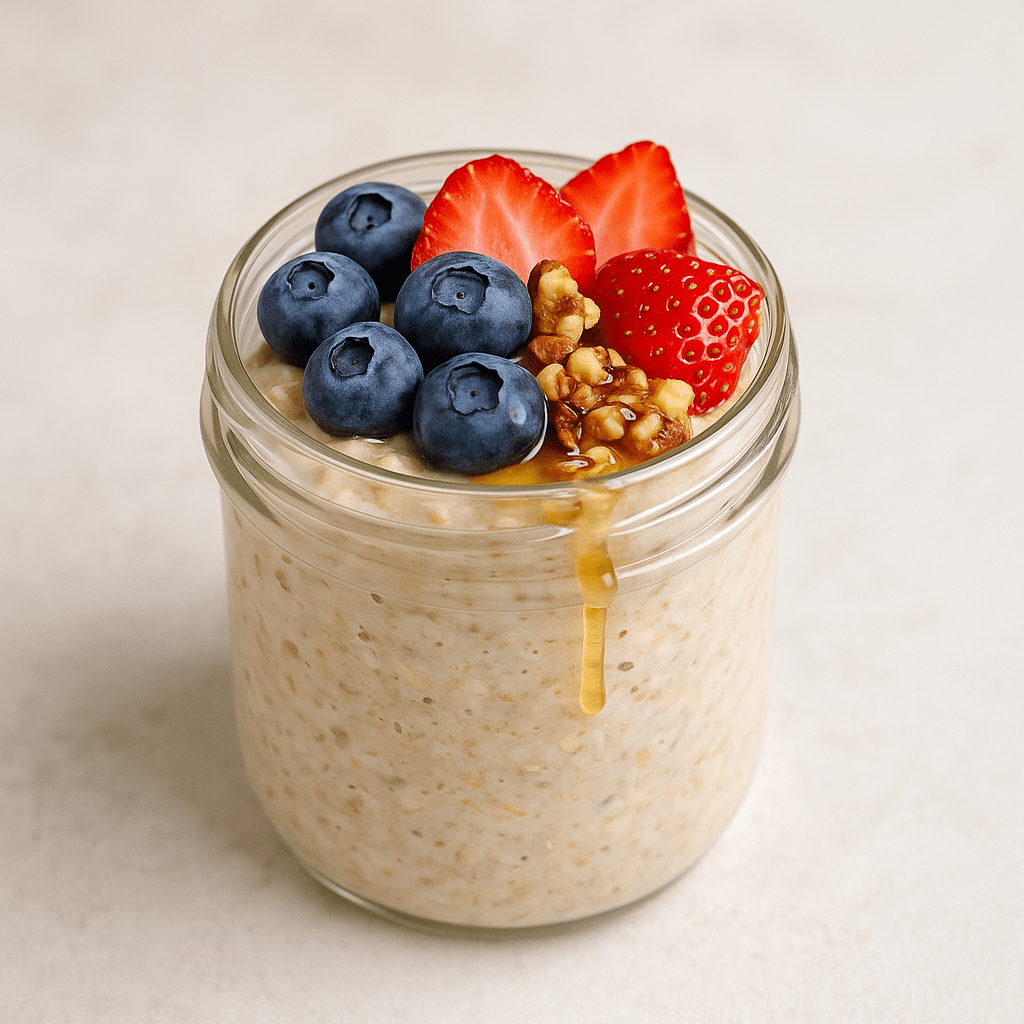
  7. Breakfast is for the body and the mind. After all of this deep thinking and skills development, you will need something to replenish yourself and support the personal growth that is happening within. As with all meals, think about your macro and your micronutrients. Macronutrients will fill you up. This is protein, carbohydrates, and fats. Eggs, chicken, fish, peanut butter, avocado, etc. Micronutrients provide you with the vitamins and minerals that are essential for a healthy immune system, brain function, bone health, and cell growth. Think, fruits, veggies, grains, dairy, nuts, and seeds. My go to breakfast at the moment is usually 3 eggs (cooked any way I choose) and a banana. Sometimes I will sautĂ© some jalapeños and spinach or kale with it and always add cheese if I scramble them. I can make a wrap out of it or if I’m really hungry, I’ll also add a slice of peanut butter toast with blueberries and honey on top. Check out these links for some more nutritious recipes: Eggs and PB Toast, Smoothie, Breakfast Sandwich.
  8. Give yourself time. You might ask “how can I fit all of this into a morning routine? I’m a busy person.” The answer is simple. Make your physical and mental health a priority in your life. If you do, it will change all other aspects of your life! First, adjust your sleep cycle. Make sure you go to bed and get up around the same time every day. This will improve the quality of sleep that you get. Next, wake up at least two hours before you have to leave for work. This will give you peace of mind knowing that 1. You don’t have to rush out the door and worry about being late, and 2. Your job isn’t the first thing you have to do or focus on in the morning. You can instead focus on your personal development and even enjoying your hobbies. So get to it and stay consistent. Now you’re ready to go about your day with a clear head, a relaxed body, and the positive mindset you need to tackle anything that comes your way!

YouTube video here

McGregor vs. Mayweather, Overconfidence and Psychological Warfare

Now in days it looks like the UFC is turning into the WWE. And while many people are star struck by these larger than life personalities, others realize the trash talk is all about the money honey. But is there another reason for this diabolical dialect in modern combat sports?

Here, we take a look at how intimidation factors can potentially affect the outcome of a fight. This is not something new and has in fact been done for millennia. Everyone remembers King Leonidas’ taunting reply when the Persians command the Spartans to lay down their weapons. Leonidas challenges “come and get them!” This overconfidence is a double edged sword and can be a blessing or a curse.

A high level of confidence can lead a person to rise and conquer any obstacles in their path. Nobody even attempts to climb a mountain if they think the mountain will win. Furthermore, there is an endless list of professionals who think highly of themselves and for good reason. The question is their self confidence a result of their success, or is their success a result of their self confidence. Nevertheless, there are few that would argue that believing in yourself is a bad thing.

Conversely, false grandiosity can lead you down a path of destruction. Take Ronda Rousey’s last fight for example. You could  see an almost limitless level of confidence and determination on her face that was likely falsely inspired by her trainers. I’m not trying to talk bad about Rousey as I have nothing but respect for her, but she had no business going toe to toe with Nunes and her coaches should have let her know that. Be realistic with your situation and play your cards accordingly. Contradicting this I could also argue that if one does not believe they can do the impossible, they will never achieve what is thought to be impossible.

Now I must admit that Conor and Floyd are two of the baddest men on the planet regarding their trades, but we’re not here to look at how they throw their fists as we are looking at how they throw their words. McGregor is busting Mayweather about his tax issues, so Mayweather brings a bag (ostensibly) full of cash to convey that he is the top dog and in no financial trouble. However Conor outs  Mayweather and shows there is only a measly five grand in his bag; chump change. This is potentially humiliating for Floyd. He may question that if the IRS can take him down, why not McGregor as well.

However, Mayweather may have the last laugh. He continuously calls Conor a quitter, reminding McGregor of how he tapped to Nate Diaz’s rear naked choke at UFC 196 for his only official UFC loss. Mayweather will take this even one step further. Now looking into the possibility of having Diaz walk him to the ring on fight night; reminding McGregor one last time that he is not invincible.

Breaking your opponents ego and leaving them with the slightest self doubt in their mind could demolish their decisive striking action and lead to a lights out knock out punch.

Like most people, I agree that unless McGregor clips Mayweather on the sweet spot like he did with Aldo, It will likely be Mayweather by decision. But is the end strictly a result of athletic ability, or is mental toughness a significant factor as well? It is still unknown how much they have gotten under each other’s skin. We will find out on fight night.

For the rest of us in everyday life, it is important to believe in yourself, but also be realistic about your limitations. Most importantly, learn from your failures and never give up! 

What do you think? Can trash talk and grandiosity give be a significant factor to the outcome of a fight? Let me know in the comments below.


Is that extra cup of coffee really dangerous?

coffee-wallpaper-1306-1433-hd-wallpapers

That heavenly cup of Joe is without question one of the most popular drinks on the planet. As I sit down to write this at 7:16pm I enjoy my second cup of the day. My brewing preference? The French press (amazon affiliate). Roast? Always the dark! Grab some Starbucks or upgrade to some Black Rifle Coffee. To a regular consumer, even the smell of the grinds can engage a psycho-physiological response that may stimulate brain activity and send shivers down your spine. It is known that the olfactory sense has significant ties to emotional cognition and memory. For example, just a whiff of that sweet aroma may remind you of that man (or woman) you used to meet for coffee all those years ago (hopefully that’s a good thing). That being said, it may be easy for people to underestimate the power of this ancient brew.

I was never a big coffee drinker. As a kid I would sip my dad’s cup just because I wanted to be like a grown up. Fast forward 20 years and I find myself in grad school rooming with a retired Marine. He and the others would make a pot every morning, and eventually I succumbed to join the guys over a cup and a good conversation. I noticed an increase of brain activity and I was definitely talking faster and more often. This I liked. I especially enjoyed this boost in energy in the early mornings when teaching elementary school. However, this energy boost would not last forever.

I would always drink mine black to avoid detrimental effects of another dangerous drug (sugar). Like with many drugs, habitual use of caffeine will lead the body to build up a tolerance to it. As the months went by, I found myself needing more and more of this full bodied elixir just to feel the same effects. I never had to travel far if I ran out because I could find a Starbucks vending machine right outside my place. In fact, there were at least four coffee shops on my half mile walk to class. Next thing I knew, I was drinking two cups before work, and at least one cup before my evening grad school classes. During finals week I was up to about five cups per day. Even when I took a trip to Japan, I would seek out bottles (hot or cold) in the street vending machines in order to fight off the jet lag.

Withdrawal from caffeine does not appear to be deadly or even significantly dangerous. According to WebMD, withdrawal symptoms include headache, fatigue, anxiety, irritability, depressed mood, and difficulty concentrating. If I were to skip my morning fix, I would be plagued in the evening by migraines and even once left class early to go get a Coca-cola and stick an ice pack on my head. I also had severe difficulty concentrating (at least more than normal).  I had become overdependent upon this teeth browning debauchery to get me through the day.

After graduation, when all the hard work was done, I decided that enough was enough. I quit drinking coffee all together and my body re-acclimated it’s homeostasis to that of a non-coffee drinker within the week. For a few months, I have been happy getting up every morning with light exercise and breath control as my new clean energy source. But as a new school year approaches I have jumped back on that caffeinated convoy because I know it will lead to a substantial increase of productivity while teaching. I’m currently keeping it under control with two cups in the morning, and I do at least one detox day every few months to reset.

In the end, is an extra cup-a-day going to kill you? No, but be wary of the fact that one cup may very well turn into three or four; and you may want to save your future self from some headaches by setting a daily limit and sticking to it. As for me, only time will tell.

Caffeine Myths and Facts. (n.d.). Retrieved July 29, 2017, from http://www.webmd.com/diet/caffeine-myths-and-facts#1

Stay on the lookout for my next book review!

Book


Substratum: A Jumping Point

This is the post excerpt.

Inspiration is an invaluable tool for the essential minds (like yours) that will shape the future of humanity. It has been learned that the smallest ideas or actions have had monumental effects on the world in which we live. As a lover of metaphysics, psychology, arts, exercise, and education, I have created this blog to inspire readers and promote global change for the better. It is my goal to give readers points of inspiration and the knowledge they need to make excellent changes in their lives and the lives of their acquaintances. I invite you to use this blog as a jumping point. Beginning at the substratum, leaping up through the stratosphere. Let this page be a foundation that you can continuously check back with as a resource for better living.

I encourage thoughtful conversation and would like to hear the voices of my readers (yes I mean you!). If there is a particular topic you would like to hear about, do not hesitate to ask!

post