Published on Substratum
Known as the wisest book ever written. It is said that you could read it in an afternoon, but you could study it for a lifetime.

🌿 Introduction
Few works of philosophy have influenced as many people for as long as the Tao Te Ching. Written over 2,500 years ago, this brief yet profound text continues to shape Eastern and Western thought alike. Its poetic reflections on balance, humility, and harmony have inspired leaders, artists, spiritual seekers, and scholars across centuries.
In this article, we’ll explore the history, authorship, and key ideas of the Tao Te Ching — and why its wisdom remains timeless.

📜 Origins and Authorship
The Tao Te Ching (道德經) — translated roughly as “The Classic of the Way and Virtue” — is traditionally attributed to Laozi (Lao Tzu), a semi-mythical philosopher thought to have lived in the 6th century BCE.
According to legend, Laozi served as a record keeper in the Zhou Dynasty court. Disillusioned by corruption and social decline, he decided to leave China, but before departing, a border guard named Yinxi recognized him and asked for his wisdom. Laozi then composed the Tao Te Ching — about 5,000 Chinese characters — and disappeared into the west.
While this story is likely apocryphal, the text itself emerged from early Daoist (Taoist) traditions that sought to align human life with the natural order of the universe. Scholars now believe the Tao Te Ching was compiled gradually between the 4th and 3rd centuries BCE, reflecting layers of oral wisdom and poetic thought.

📚 The Meaning of “Tao” and “Te”
Tao (道) means the Way — not just a path, but the fundamental order and flow of the universe. It is the source of all things, yet it cannot be defined or named. Te (德) means virtue or power — the manifestation of the Tao in the world through one’s actions, character, and alignment with nature.
Together, “Tao Te Ching” can be translated as “The Book of the Way and Its Virtue.”

🧘♂️ Key Themes and Philosophical Ideas
1. Wu Wei (無為): Effortless Action
One of the central ideas of the Tao Te Ching is wu wei, or “non-action.” This doesn’t mean doing nothing, but rather acting in harmony with the natural flow of things. True wisdom and effectiveness arise when one stops forcing outcomes and allows life to unfold naturally.
“The Tao never does anything, yet through it all things are done.” — Chapter 37
2. Simplicity and Humility
The text emphasizes simplicity, humility, and modesty as paths to peace and strength. The sage leads not through dominance, but by serving others and staying connected to the natural rhythm of life.
“The highest good is like water. Water benefits all things and does not compete.” — Chapter 8
3. Relativity and Paradox
The Tao Te Ching often uses paradox to challenge rigid thinking. Good and bad, strong and weak, high and low — these opposites define each other and cannot exist independently.
“When people see some things as beautiful, other things become ugly. When people see some things as good, other things become bad.” — Chapter 2
4. Return to the Source
A recurring theme is the return to one’s original nature — simplicity, stillness, and unity with the Tao. In this return, one finds peace beyond the turmoil of desire and ambition.
🪶 Structure and Style
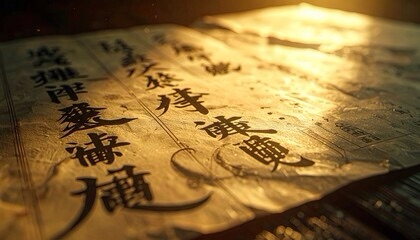
The Tao Te Ching contains 81 short chapters, written in rhythmic, poetic form. The text blends mysticism, political philosophy, and personal ethics. Because classical Chinese is highly compact and ambiguous, translations vary widely — each revealing new shades of meaning.
Notable translators include Stephen Mitchell, D.C. Lau, Gia-Fu Feng & Jane English, and Jonathan Star, among others. Some emphasize poetic flow, while others focus on linguistic accuracy or philosophical clarity.

🌏 Influence Across Cultures
The Tao Te Ching has profoundly shaped Daoism, Confucianism, Chinese Buddhism, and even modern psychology and leadership theory.
Its ideas influenced Zen Buddhism in Japan, transcendentalism in the West, and even contemporary mindfulness movements. Thinkers like Alan Watts, Carl Jung, and Thomas Merton all drew on its insights into balance, paradox, and the nature of being.

💡 Modern Relevance
In an age of overwork, information overload, and environmental crisis, the Tao Te Ching offers a refreshing antidote. Its wisdom reminds us that strength lies in gentleness, and clarity in stillness.
Learning to flow with life rather than fight against it can lead to greater peace, creativity, and harmony — both within ourselves and with the world around us.

✨ Conclusion
The Tao Te Ching is more than a book — it’s a mirror for the mind. Each time you read it, its meaning changes, reflecting your state of being.
Its message is subtle yet universal: when we let go of control and return to simplicity, we rediscover the profound order of the Tao — the Way that flows through all things.
📖 Recommended Reading
Tao Te Ching — translated by Stephen Mitchell
The Tao of Pooh — by Benjamin Hoff
 Mindful Explorer